Drone Detection for Events and Temporary Venues
Discover how portable Zaruba A3 passive RF drone detection supports security at concerts, festivals, stadiums, and temporary venues.
Overview
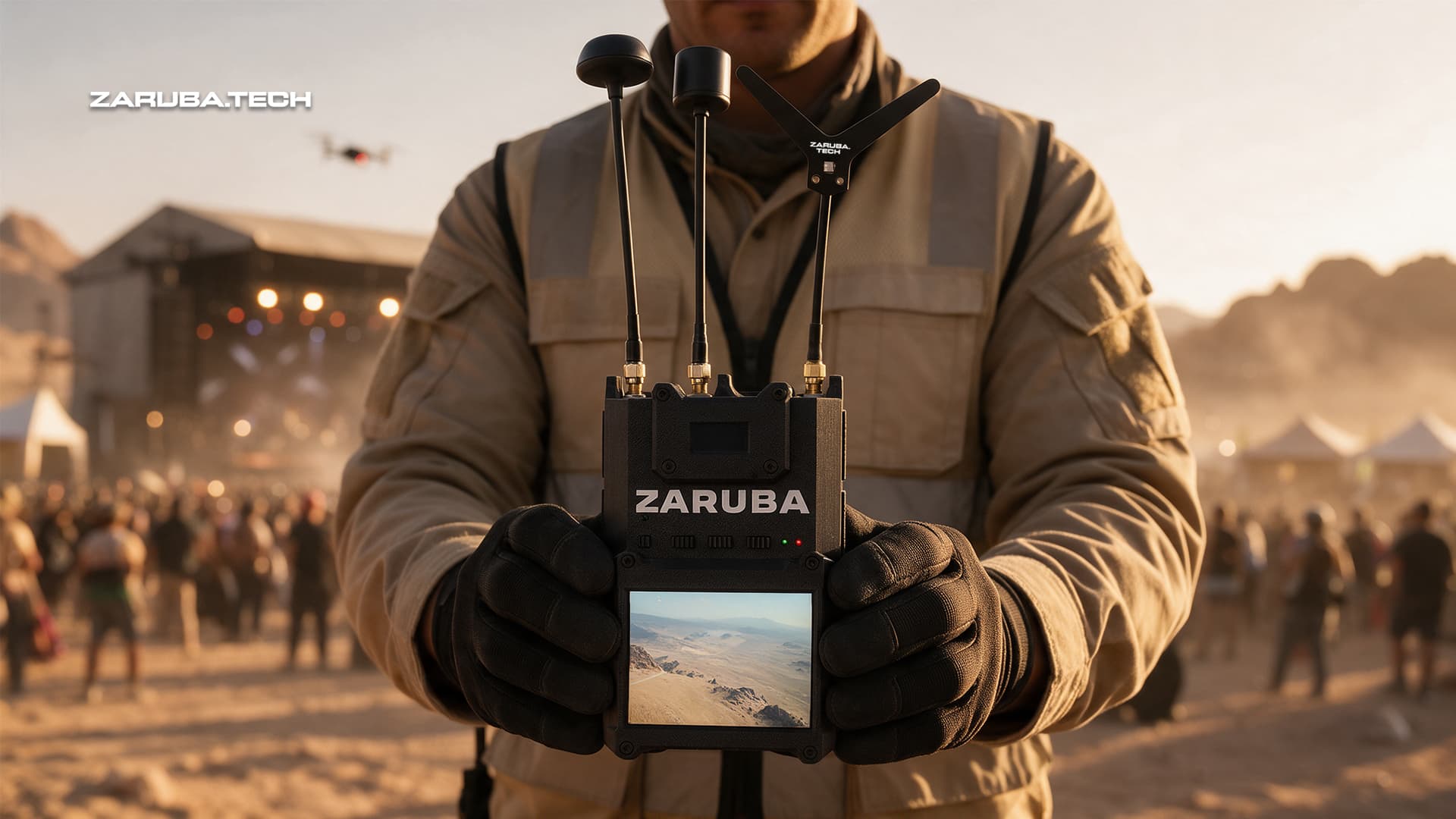
Drone awareness for temporary events requires a security solution that deploys quickly, operates without permanent infrastructure, and adapts to changing site layouts. Zaruba A3 is a portable, passive RF drone detection device that helps security teams identify compatible drone-related radio activity and improve situational awareness at venues where installing a permanent detection system is impractical.
Other products by Zaruba Tech
Why Drones Are a Security Challenge at Large Events
Large public events bring together thousands of people in environments where security teams must monitor multiple access points, open spaces, restricted areas, and surrounding airspace. Unauthorized drone activity can create safety concerns, disrupt event operations, and introduce uncertainty for security personnel.
A drone may enter the area to capture unauthorized footage, approach restricted zones, or interfere with planned activities. Even when the operator's intentions are unclear, security teams need timely information to assess the situation and coordinate an appropriate response.
Traditional ground security measures cannot provide complete awareness of activity in the air. Drone detection adds another layer of monitoring, helping personnel recognize potential threats and make informed decisions without relying exclusively on visual observation.
Event Types That May Require Drone Awareness
Drone detection can support security planning for events with large audiences, sensitive operations, temporary restricted areas, or limited visibility across the site.
- Stadiums: Monitor potential drone activity around spectator areas, playing fields, and restricted operational zones.
- Concerts: Support security teams responsible for performers, backstage areas, equipment, and audience safety.
- Festivals: Add drone awareness across temporary stages, open grounds, and distributed event infrastructure.
- Conferences: Help protect restricted areas, VIP zones, and venues hosting sensitive business or government discussions.
- Public gatherings: Support situational awareness at rallies, ceremonies, and other events where crowd safety is a priority.
- High-profile events: Add a detection layer for occasions involving public figures, senior officials, or elevated security requirements.
- Temporary venues: Provide monitoring options for pop-up installations, outdoor events, and sites operating for a limited period.
The appropriate detection setup depends on the venue's size, layout, expected RF environment, security objectives, and available personnel.
Why Portable Detection Fits Temporary Events
Temporary event security requires equipment that can be deployed within a limited preparation window and relocated as operational needs change. Building permanent detection infrastructure may be unnecessary or impractical when a venue exists for only a few days or weeks.
Portable RF detection offers several advantages.
Rapid deployment
Portable equipment can be brought to the venue and prepared for operation without constructing a dedicated, permanent installation. Setup requirements still depend on the selected configuration and site conditions.
Temporary perimeter coverage
Detection devices can be positioned at selected monitoring points around event grounds, access routes, or restricted areas. Multiple positions may be needed to address the site's geometry and RF conditions.
Support for mobile security teams
Personnel can relocate equipment as event operations evolve, provided the new position offers suitable operating conditions and power availability.
Minimal infrastructure requirements
A portable device reduces the need for permanent mounting structures and dedicated site installations. This is particularly useful for outdoor events, rented venues, and temporary security posts.
These advantages make portable detection a practical component of event security planning. They do not eliminate the need for site assessment, operator training, communication procedures, or coordination with other security systems.
Role of Passive RF Drone Detection
Passive radio frequency (RF) detection identifies relevant radio signals without transmitting RF energy itself. Depending on the device's capabilities and the signals present, it can help security personnel recognize activity associated with compatible drone systems.
This approach is particularly relevant at temporary events because it adds a monitoring capability without introducing an active RF transmission from the detector. It can therefore complement existing security arrangements where minimizing additional radio emissions is important.
Passive RF detection can help operators:
- Identify compatible drone-related signals within supported frequency bands.
- Receive alerts when relevant radio activity is detected.
- Improve awareness of potential drone activity in monitored areas.
- Inform further assessment and coordination with the event security team.
Detection performance depends on factors such as the drone's communication system, frequency, signal strength, distance, antenna configuration, and surrounding RF interference. Passive RF detection should therefore be treated as one source of security information rather than a complete picture of all aerial activity.
How Zaruba A3 Can Support Event Security
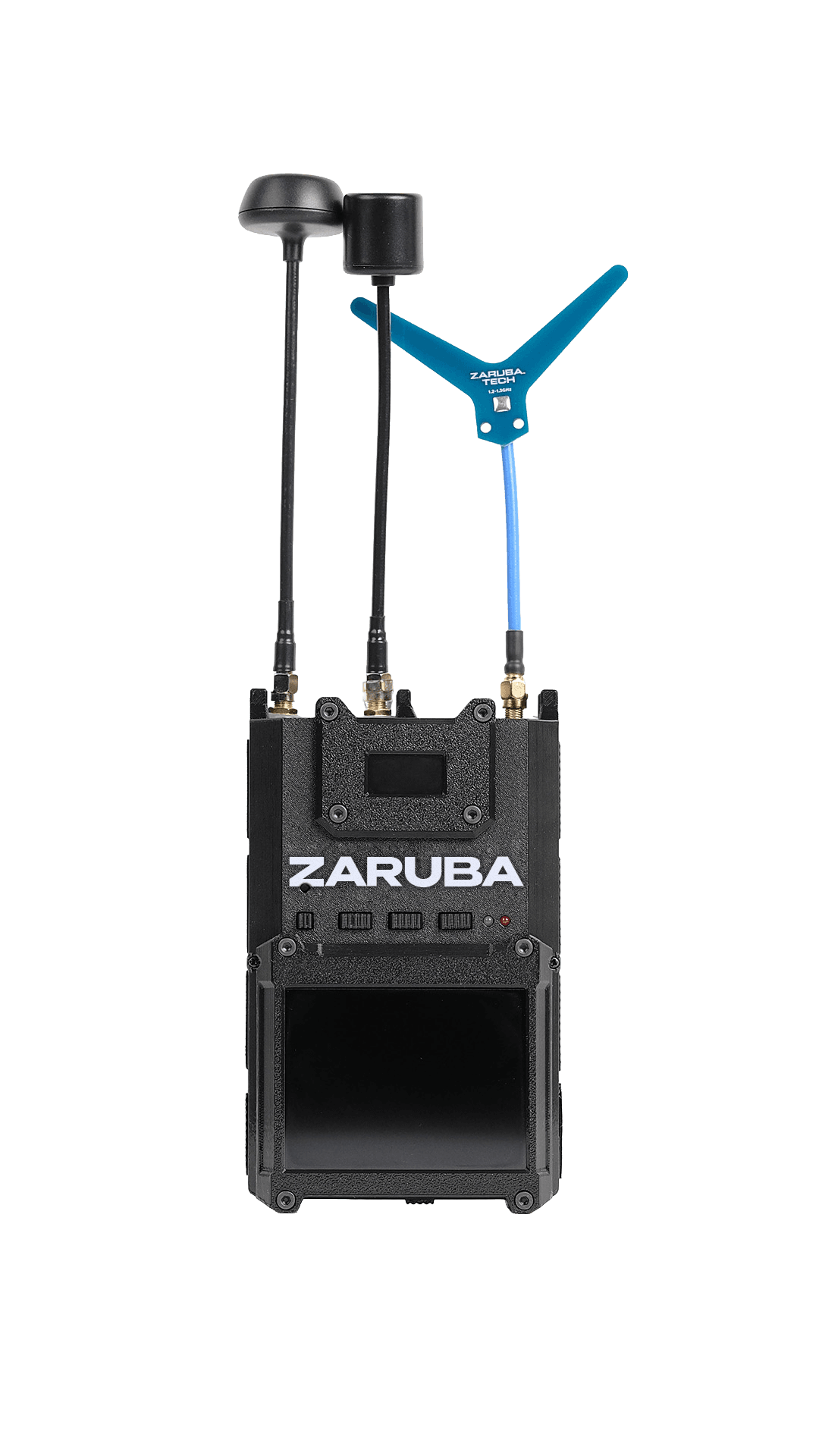
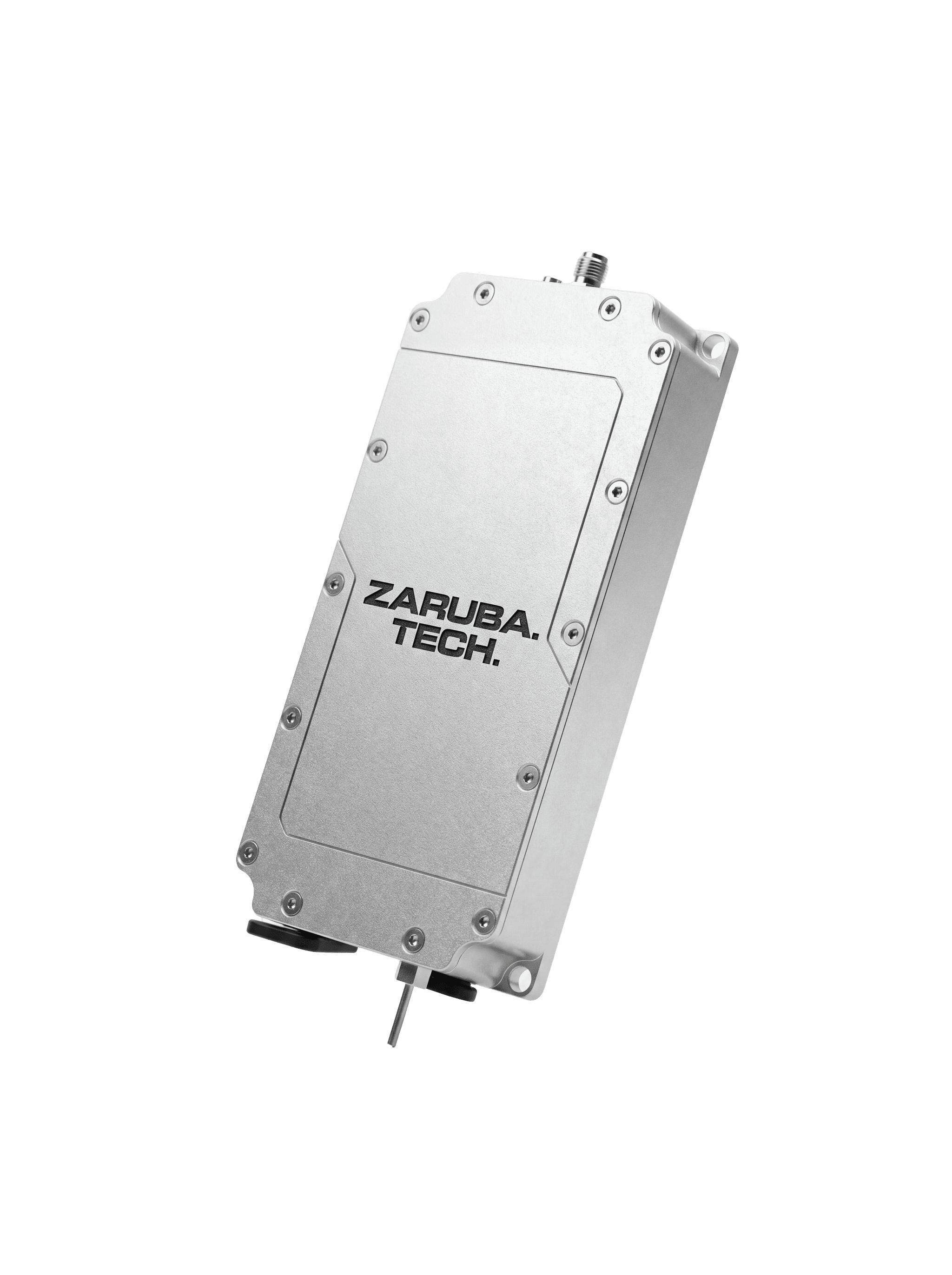
Zaruba A3 is a portable, passive RF drone detection device designed to monitor supported frequency bands and help operators recognize compatible analog FPV video signals. Its compact form factor supports deployment at temporary monitoring positions where permanent infrastructure is unavailable or unnecessary.
For event security teams, the device can support a practical workflow built around three considerations.
Portable deployment
A3 can be transported to the venue and deployed at selected monitoring positions. Its portability is useful when the event layout changes between setup, live operations, and dismantling, or when security personnel need to establish monitoring points for a limited period.
Temporary monitoring positions
Security planners can position the device based on site-specific requirements, including areas where RF monitoring can provide useful information. Placement should account for the venue's physical layout, potential obstructions, nearby RF sources, and the equipment's supported frequency bands.
Operator alerts
A3 provides operator-facing indications of detected activity, helping personnel assess potential drone-related signals and communicate relevant observations to the security team. Alerts can inform situational awareness and escalation procedures, but personnel should interpret them in context and, where possible, verify them with complementary measures.
A3 is not a standalone event security system. Its value comes from integrating RF detection into established procedures for observation, incident assessment, communications, and response.
What RF Drone Detection Can and Cannot Provide
Understanding the capabilities and limitations of RF detection is essential when selecting equipment for a temporary venue.
Capabilities
Passive RF drone detection can identify supported radio activity associated with compatible drone systems. Depending on the device and signal conditions, this can help operators recognize potential drone activity and receive alerts without requiring the detector to transmit radio signals.
For temporary events, this provides an additional information source that can be incorporated into security monitoring and incident assessment.
Limitations
RF detection does not guarantee the detection of every drone. Results depend on whether the target system emits signals the device can detect, whether those signals fall within its supported frequency bands, and whether operating conditions allow the signals to be received.
Autonomous drones, radio-silent flight profiles, unsupported communication protocols, weak signals, obstructions, and RF interference can limit detection. RF detection alone also does not provide complete visual confirmation, guarantee precise drone positioning, or establish an operator's identity.
Detection range is conditional rather than universal. Actual results depend on the target, its transmission characteristics, antenna placement, terrain, and local RF conditions.
Relevant Zaruba A3 Specifications
The following specifications are relevant when evaluating Zaruba A3 for events and temporary venue applications.
- Frequency bands: 1.2 GHz, 3.3 GHz, and 5.8 GHz.
- Scanning speed: 4-8 seconds for a full cycle.
- Detection range: Up to 2.5 miles under suitable conditions.
- Battery life: 4,500 mAh battery capacity.
- Weight: Up to 23 oz.
- IP rating: IP54.
- Operating temperature: 14°F to 122°F
Related solutions
- Mobile Drone Detection
- Law Enforcement Drone Detection
- Protective Security Drone Detection
Related resources
Learn how passive RF detection works and how it integrates into a broader counter-UAS system:
- FPV Drone Detection: Capabilities and Limitations
- How Passive RF Drone Detection Works
- Counter-UAS Detection Layers
Add Drone Awareness to Your Event Security Plan
Choose a detection setup that fits your venue, operating conditions, and security objectives. Zaruba Tech can help you evaluate the capabilities of Zaruba A3 and determine whether passive RF detection meets your temporary monitoring requirements.
- Explore Zaruba A3
- Download A3 Datasheet
- Contact Sales