Zaruba UGV Ground Robotic Complex for Tactical Support & Remote Operations
Modular ground robotic platform designed for logistical, evacuation, reconnaissance, and transport tasks.
Video review of the device
[ Video review ]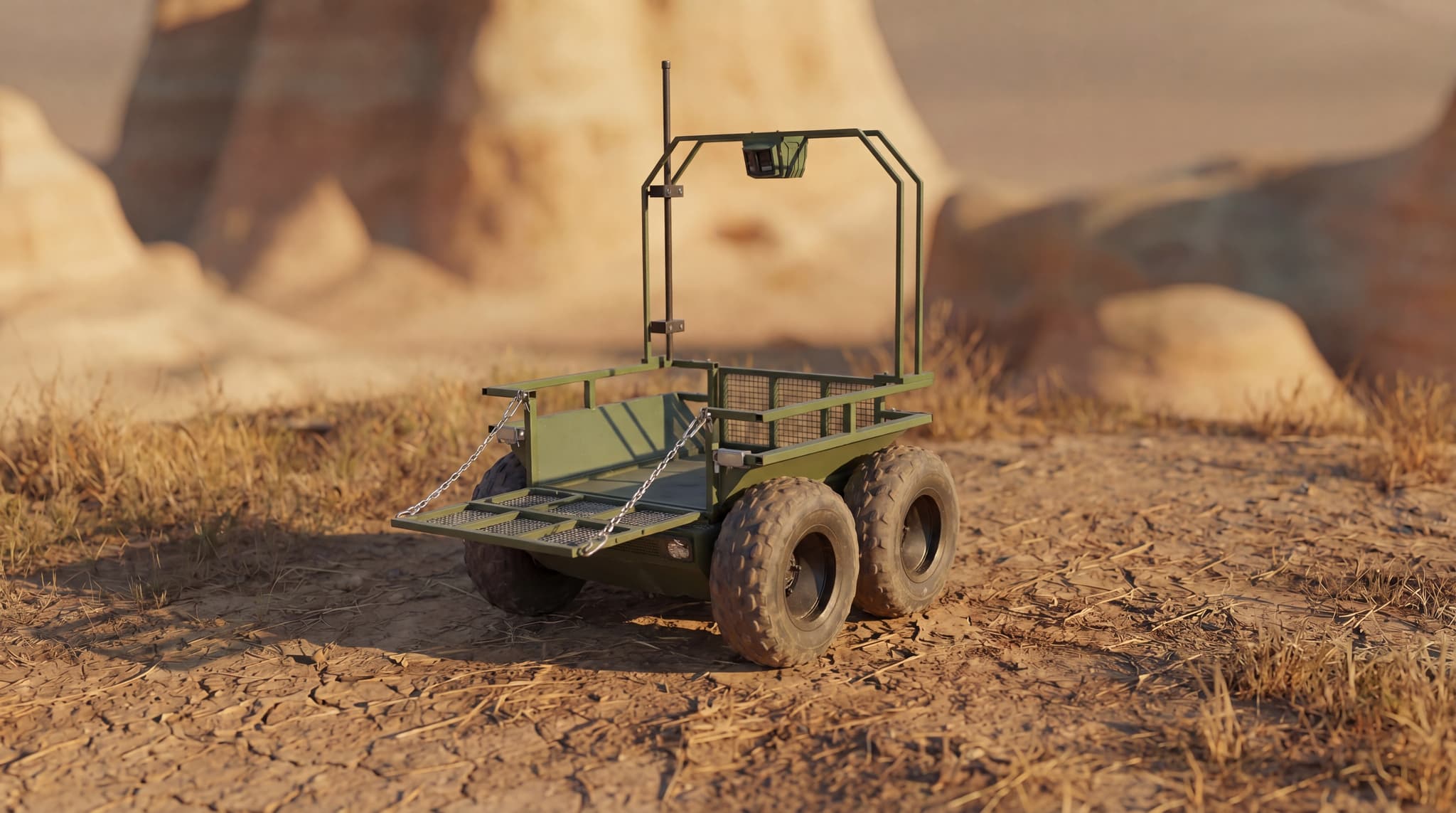
Zaruba UGV ground robotic complex gallery
Modifications of Zaruba UGV ground robotic complex
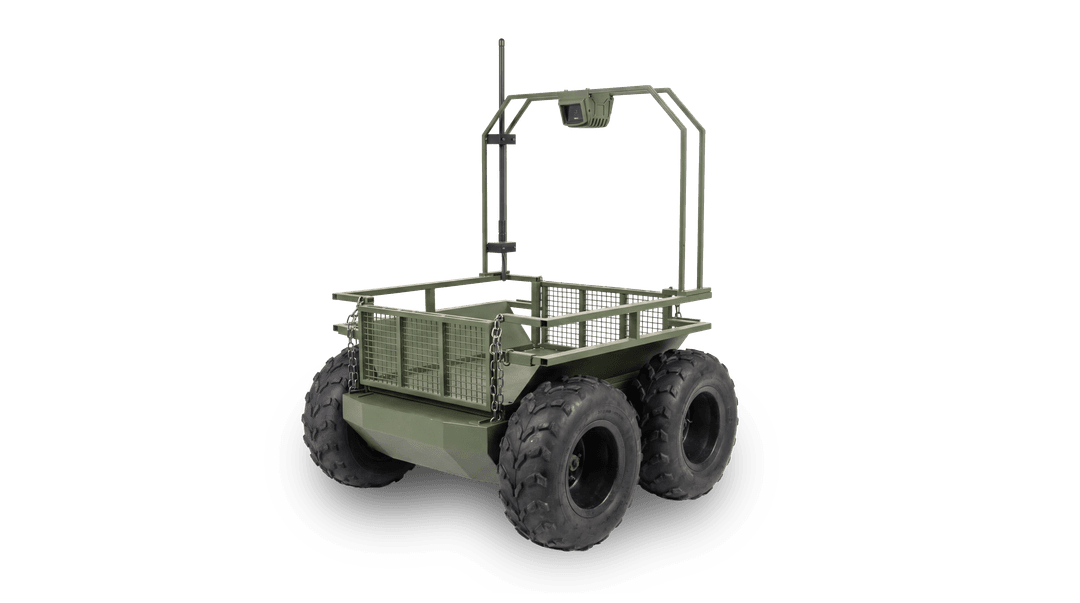
Zaruba UGV 1
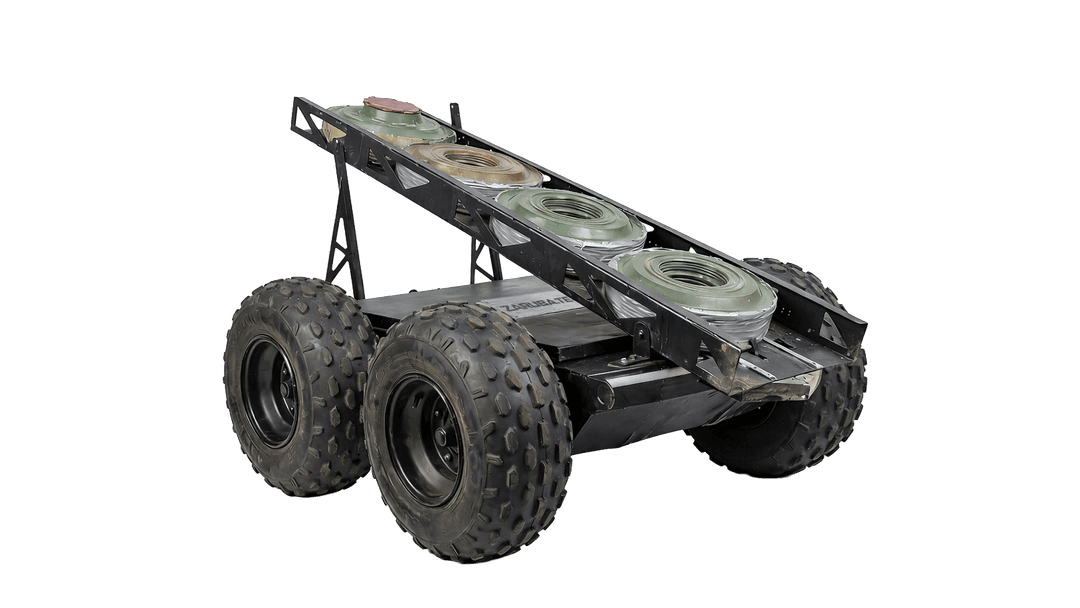
Zaruba UGV miner
Zaruba UGV for Tactical Support & Remote Operations
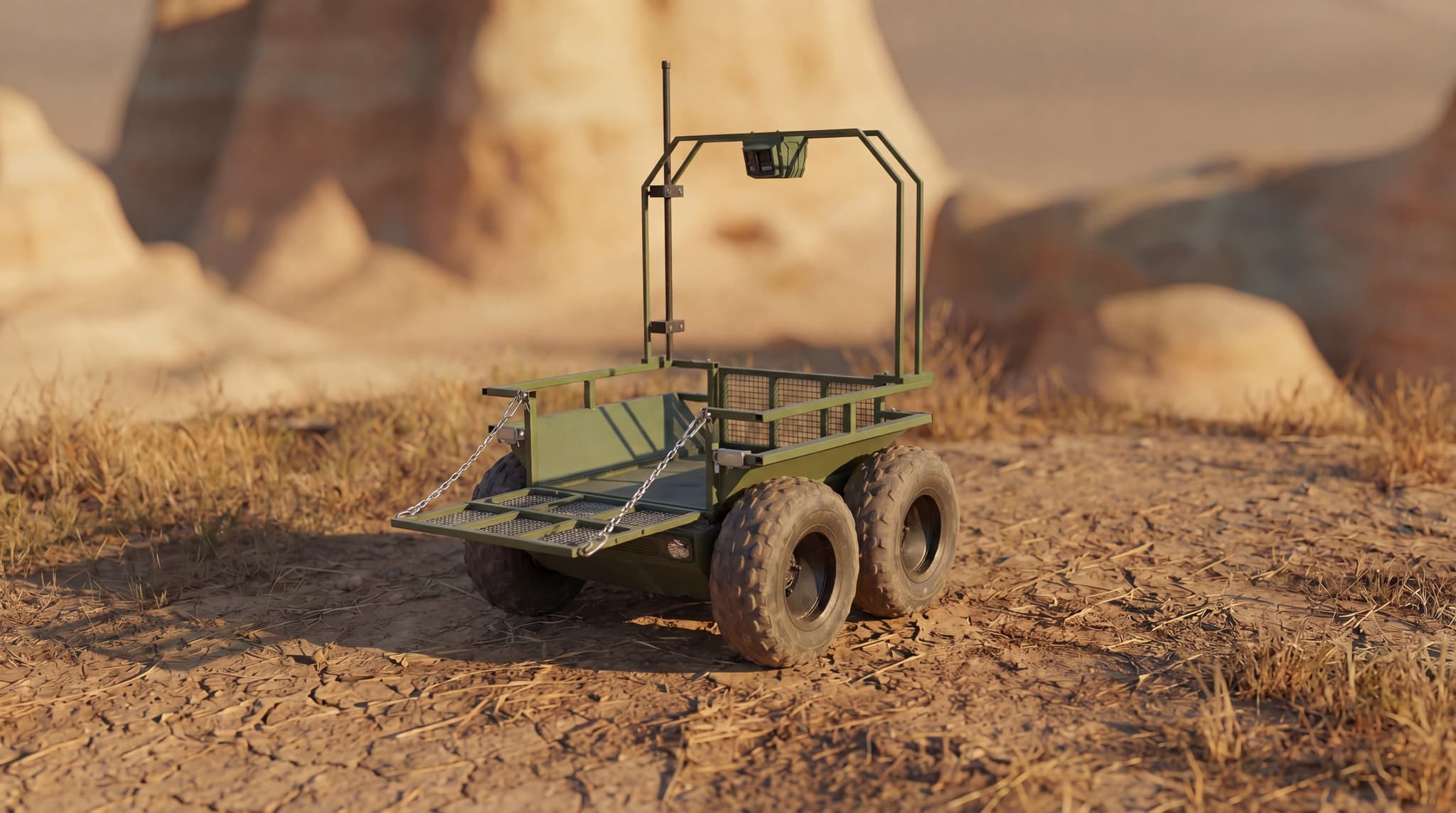
“Zaruba UGV” unmanned ground vehicle is a modular ground robotic system based on four independent drive wheels, designed to perform logistical, evacuation, mine-clearing, reconnaissance, and engineering tasks with remote control and modular equipment. The platform is powered by an electric drive system and is operated manually via remote control through the ELRS communication system, ensuring stable movement control. “Zaruba UGV” features a low center of gravity and wide wheels, providing stable movement on hard surfaces and rough terrain, maintaining maneuverability and minimizing the risk of tipping
Contact usKey features of Zaruba UGV ground robotic complex
Payload capacity: up to 441 lbs
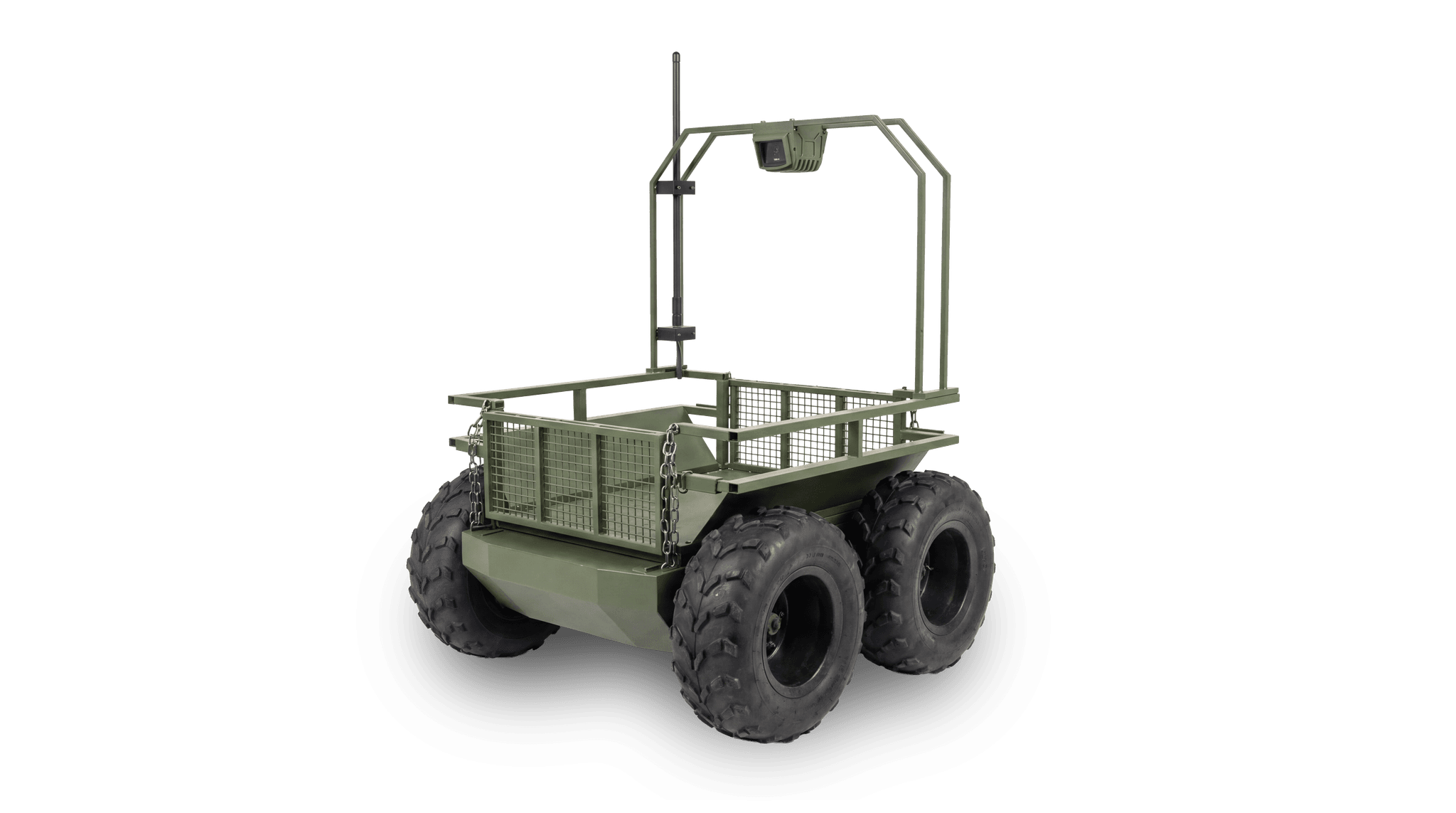
Payload capacity: up to 441 lbs
Technical characteristics of Zaruba UGV ground robotic complex
The complex uses manual remote control based on the ELRS system with adjustable operating frequencies, allowing control to be adapted to the conditions of the radio environment.
Equipped with an analog night camera that provides visual monitoring in low-light conditions and at night.
The wide tires ensure confident obstacle traversal, including climbs up to 25–30°, sand, grass, puddles, mud, logs up to 11.8 in in diameter, and small obstacles.
Platform dimensions: length — 42 in, width — 39 in, height — 28 in, ground clearance — 7 in. The system can be easily accommodated in a T4-type vehicle or in the bed of an SUV.
The electric powertrain with a total output of 1.4 kW ensures stable platform operation and the ability to transport cargo.
The body has an IP56 rating, providing protection against dust and strong water jets during operation in challenging weather conditions.
The production and technical support of the Zaruba UGV are provided by Zaruba Tech.
FAQ
The ground robotic platform enables remote delivery of cargo to hazardous areas without involving personnel. The Zaruba UGV operates over distances of 4–5 km across rough terrain and can carry up to 200 kg depending on the modification. This reduces risks to humans and ensures reliable logistics where manual transportation is dangerous or difficult.
The modular UGV can be used for logistics, evacuation, engineering, and specialized tasks. Its flexible design allows it to quickly adapt to the specific requirements of a mission.
The system can be configured to transport injured personnel or critical cargo, enabling rapid evacuation from hazardous areas. This improves response time and enhances safety during emergency operations.
Unmanned ground mobility allows tasks to be carried out in areas where human presence involves increased risk. The UGV enables cargo delivery, evacuation of injured personnel, engineering tasks, and operations in shelled zones, minefields, or adverse weather conditions. This enhances personnel safety and maintains unit effectiveness.
The platform is built on four independent drive wheels, has a low center of gravity, and wide tires. This ensures stability on solid surfaces and rough terrain, reduces the risk of tipping, and allows it to climb slopes of 25–30°, traverse sand, grass, puddles, mud, logs up to 300 mm, and other obstacles. Even if one wheel loses traction, the others continue to drive.
Remote control allows operators to manage the platform from a safe distance while maintaining full situational awareness. This enables precise maneuvering and task execution without being physically present.
Payload capacity directly determines the amount of equipment, ammunition, or specialized gear the platform can transport in a single trip. The Zaruba UGV 1 can carry up to 200 kg in the basic version and up to 150 kg in the Zaruba UGV miner version. This reduces the number of trips, saves time, and increases operational efficiency in field conditions.
The UGV can operate as part of an integrated system, supporting drone operations, transporting EW equipment, or serving as a mobile relay. Such integration enhances coordination between different technologies.
A modular architecture allows the system to be quickly reconfigured for different tasks without changing the base chassis. This means the same platform can be adapted for logistics, evacuation, engineering work, or mine-clearing operations.
The Zaruba UGV combines a 1.4 kW electric power unit, a range of 25.6 km off-road, and a simple, maintenance-friendly architecture. This allows the platform to reliably perform repetitive tasks over extended periods, reducing the workload on personnel and increasing the overall efficiency of logistical, engineering, and evacuation operations.