Counter-UAS detection is rarely based on a single sensor. Different drone types, operating environments, and flight profiles create different detection challenges, so effective systems often combine several sensing technologies. RF detection, radar, EO/IR cameras, acoustic sensors, and cooperative technologies such as Remote ID can each provide a part of the picture.
A layered architecture helps compensate for individual sensor limitations and provides more reliable information about the presence, location, and behavior of unmanned aircraft systems (UAS).
What Is Counter-UAS Detection?
Counter-UAS detection is the process of identifying the presence of an unmanned aircraft and, depending on the system, determining characteristics such as its approximate location, direction, altitude, or type.
Detection is the first stage of a broader counter-UAS process. A system may subsequently classify or identify the aircraft and, where legally authorized, support mitigation measures. Detection technologies themselves do not necessarily interfere with or disable a drone.
The main challenge is that UAS operate across a wide range of sizes, speeds, communication technologies, and flight environments. A small FPV drone flying close to buildings presents a different sensing problem from a larger aircraft operating at higher altitude.
Why No Single Sensor Detects Every Drone
Every detection technology has strengths and limitations.
RF sensors can detect radio-frequency activity associated with a drone or its control link, but they may provide limited information when a drone operates autonomously or uses communication methods that the sensor cannot observe.
Radar can detect physical objects regardless of whether they are transmitting, but small drones can be difficult to distinguish from birds, vegetation, buildings, or other objects.
EO/IR cameras can provide visual confirmation, but cameras generally require a suitable line of sight and sufficient image quality. Weather, darkness, distance, and obstructions can reduce their effectiveness.
Acoustic sensors provide another source of information by detecting sound signatures from motors and propellers, but environmental noise can complicate detection.
For these reasons, counter-UAS detection is often designed as a multi-layered process rather than a single-sensor solution.
Layer 1: RF Detection
RF detection monitors radio-frequency emissions associated with wireless communication. Depending on the system, these signals may originate from a drone, its controller, a video transmitter, or other communication equipment.
A major advantage of passive RF detection is that the sensor can listen without transmitting its own signal. This makes it useful in situations where minimizing electromagnetic emissions is important.
RF monitoring can also provide information that other sensors cannot easily obtain. For example, analyzing detected RF activity may help indicate that a drone is communicating with a control station even when the aircraft itself is difficult to see.
However, RF detection is not universal. Autonomous drones, pre-programmed flights, encrypted or unfamiliar protocols, and environments with substantial RF interference can limit what an RF sensor can determine.
This is why passive RF detection is best understood as one layer within a broader architecture rather than a replacement for other sensors.
Layer 2: Radar
Radar uses transmitted radio waves to detect objects and estimate characteristics such as range, direction, and movement.
The key distinction between RF detection versus radar is what each technology observes. RF detection monitors electromagnetic emissions. Radar actively transmits electromagnetic energy and analyzes reflections from physical objects. Unlike RF monitoring, radar does not depend on the drone actively communicating with a controller. This makes radar particularly useful for detecting aircraft that produce little or no observable communication traffic.
Modern counter-UAS radar systems can detect small, slow-moving targets. However, distinguishing drones from birds and other objects remains a key challenge, particularly in cluttered environments.
Layer 3: EO/IR Cameras
Electro-optical (EO) and infrared (IR) cameras provide visual sensing.
EO cameras operate in visible wavelengths and can potentially provide detailed images of a detected object under suitable lighting conditions. IR cameras detect thermal radiation and can be useful in low-light or nighttime environments.
Cameras are particularly valuable for confirmation and identification. Once another sensor has indicated a potential drone, a camera can be directed toward the relevant area to determine whether the target is actually a UAS.
However, camera-based detection depends heavily on line of sight. Buildings, trees, terrain, darkness, fog, precipitation, and target distance can all affect performance.
For this reason, EO/IR is often most effective when combined with sensors that can provide an initial detection or cue the camera toward a potential target.
Layer 4: Acoustic Detection
Acoustic systems detect sounds generated by drone motors, propellers, and other components.
Their main advantage is that they can provide another independent sensing modality. Acoustic detection does not depend on radio communication, so it can potentially contribute information when RF monitoring has little to observe.
The main limitation is environmental noise. Traffic, machinery, wind, construction, aircraft, and other sources can mask drone signatures or generate sounds that resemble them.
Acoustic sensing is therefore generally more useful as part of a multi-sensor system than as the sole detection method.
Remote ID and Cooperative Detection
Remote ID represents a different approach to drone awareness. Instead of detecting the aircraft indirectly through radar, RF emissions, sound, or imagery, compatible systems can broadcast identification and location-related information.
This can provide useful information about cooperative aircraft and their operators. However, it depends on the aircraft transmitting the relevant information and the receiving system being able to access it.
Remote ID therefore complements rather than replaces non-cooperative detection technologies. A counter-UAS architecture may use Remote ID to identify compliant aircraft while relying on RF, radar, cameras, or other sensors to detect aircraft that are not participating in the cooperative system.
Sensor Fusion
Sensor fusion combines information from multiple detection technologies to produce a more complete operational picture.
For example, a layered system might use radar to detect a moving object, RF monitoring to identify associated radio activity, and an EO/IR camera to confirm visually.
The value of fusion is not simply having more sensors. It is the ability to correlate their observations.
If several sensors independently report activity in roughly the same location and time, the system can be more confident the observations correspond to the same target. Fusion can also help reduce false alarms when one sensor produces an ambiguous result.
Depending on the architecture, sensor fusion can occur at different levels, from basic alert correlation to automated target tracking and classification.
Detection vs Mitigation
Detection and mitigation are separate functions.
Detection systems determine whether a drone is present and gather information about it. Mitigation refers to measures, such as those performed by EW systems, that are designed to prevent, disrupt, redirect, or otherwise stop a drone.
A detection system may therefore operate independently from a mitigation system. In a larger counter-UAS architecture, detection data can provide the information needed to support subsequent decision-making and, where legally permitted, mitigation.
Keeping these functions separate can also make system design more flexible. Different detection sensors can feed a common command-and-control layer while mitigation capabilities are managed separately.
Building a Layered Counter-UAS Architecture
A layered architecture typically starts by defining the environment and the detection requirements.
An open outdoor site may benefit substantially from radar and long-range optical systems. An urban environment may require greater attention to RF clutter, physical obstructions, and camera line of sight. Smaller protected areas may benefit from portable sensors that can be repositioned as conditions change.
A practical architecture can combine:
- RF sensors for detecting relevant radio-frequency activity
- Radar for detecting and tracking physical targets
- EO/IR cameras for visual and thermal confirmation
- Acoustic sensors for additional detection data
- Remote ID receivers for cooperative aircraft information
- Sensor fusion and command-and-control software for correlating alerts and building a common operational picture
The exact combination depends on factors such as the area being monitored, expected drone types, terrain, RF environment, required detection range, mobility requirements, and available infrastructure.
Where Portable RF Detection Fits
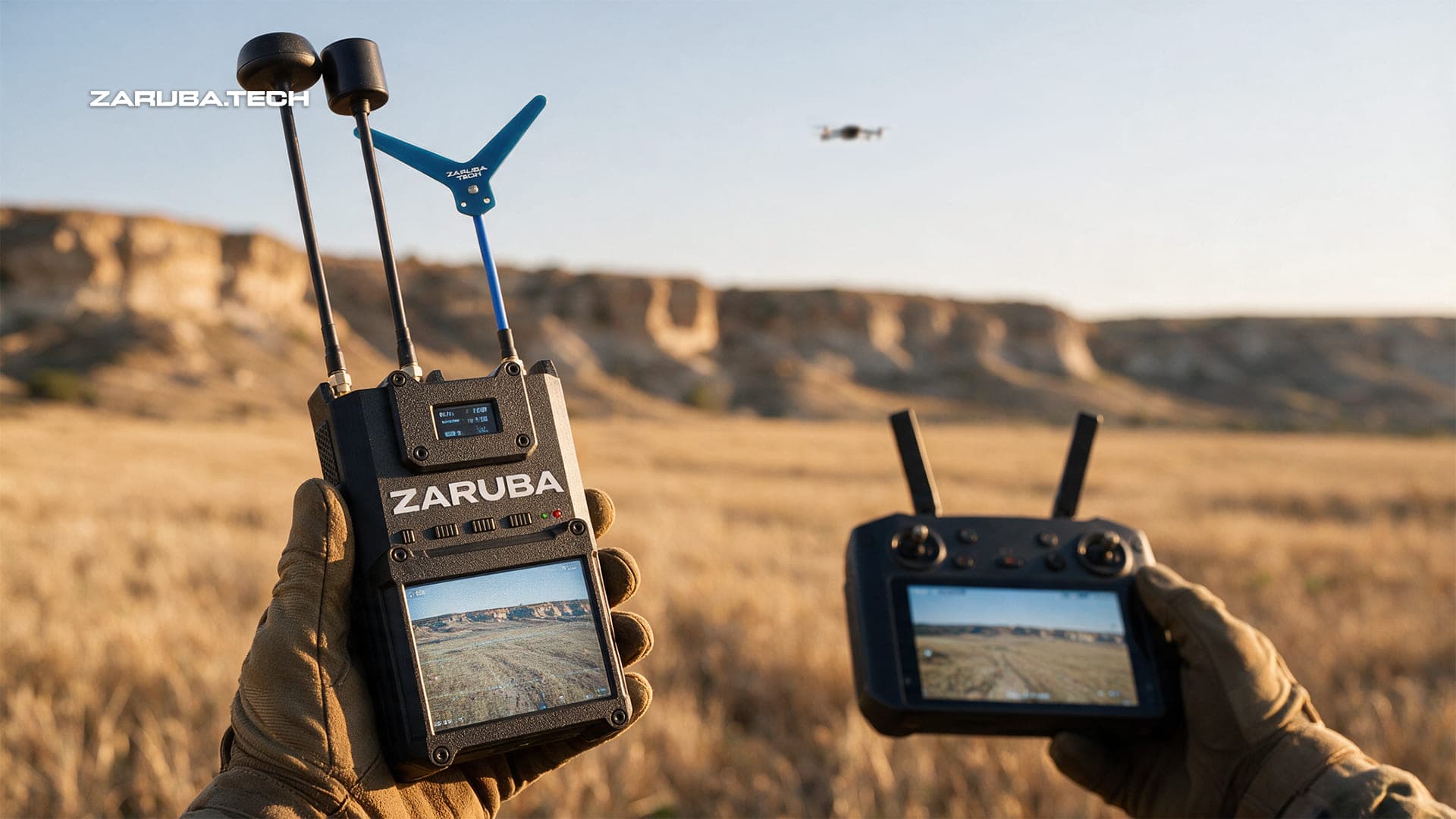
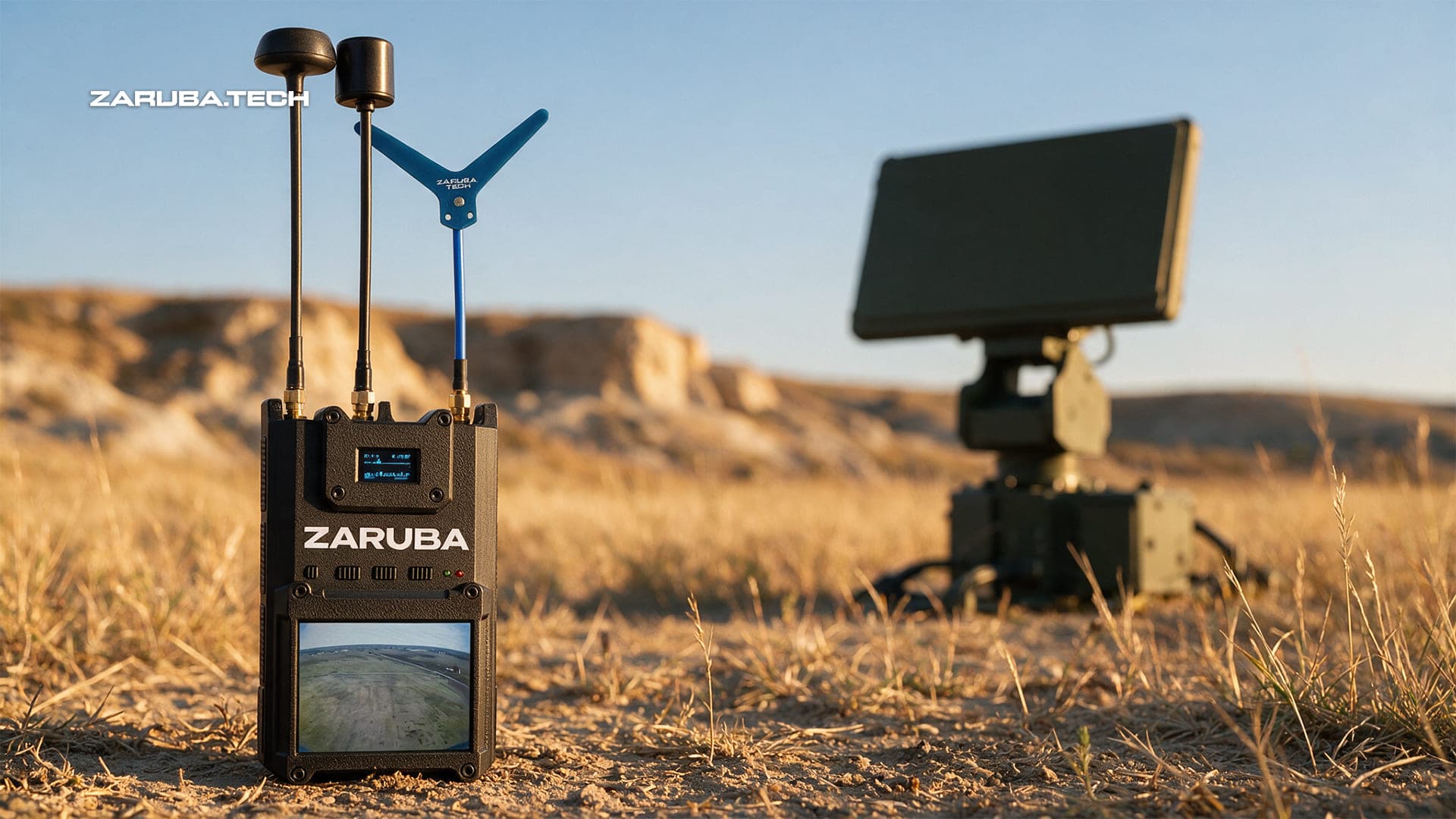
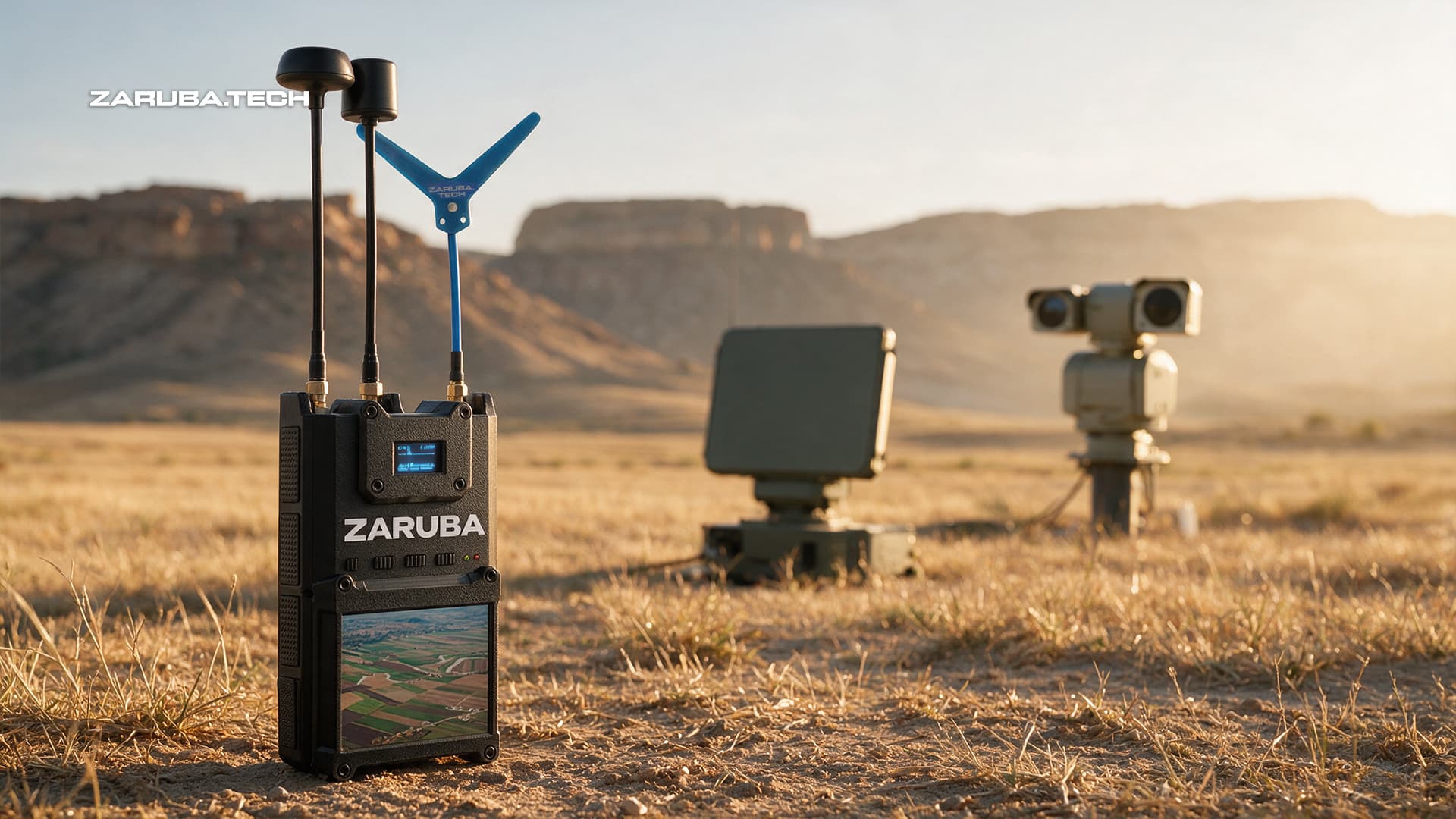
Portable RF detectors can provide a flexible layer within a broader counter-UAS architecture. Unlike fixed radar or camera installations, handheld equipment can be carried to different locations and used where permanent infrastructure is unavailable or impractical.
A portable device can also complement other sensors by providing localized RF awareness. This can help check an area, investigate an alert, or add another sensing layer to an existing detection network.
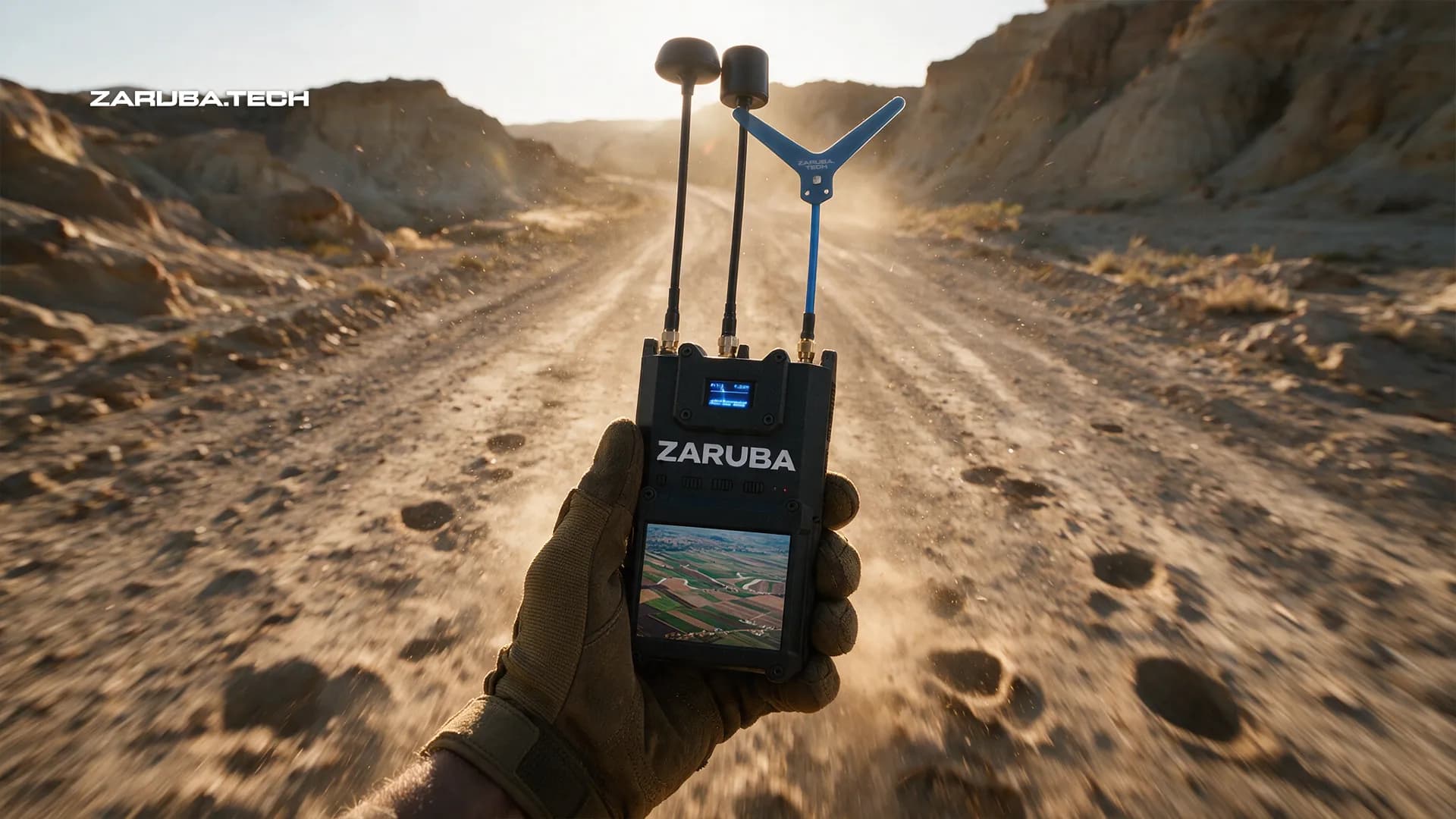
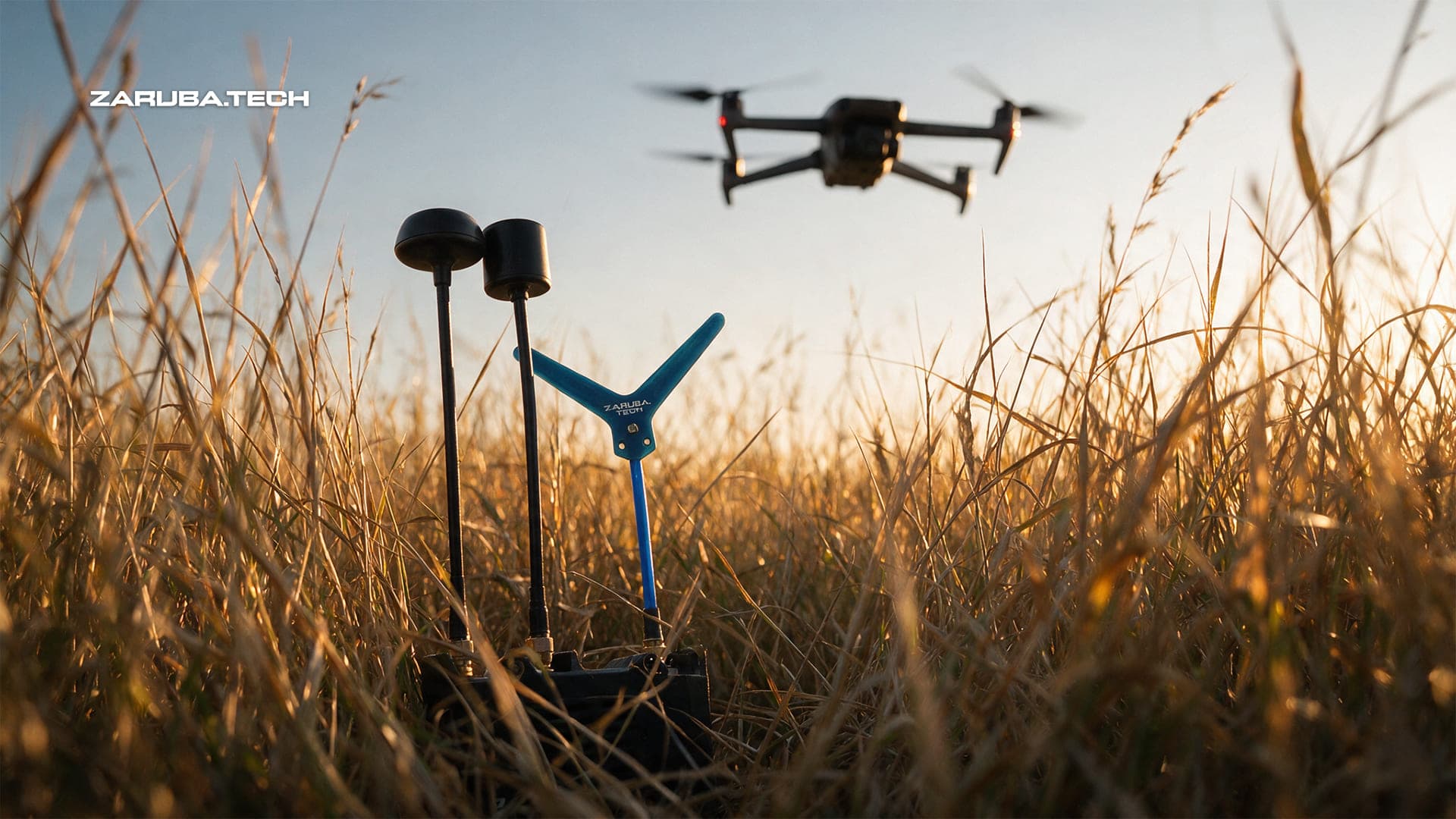
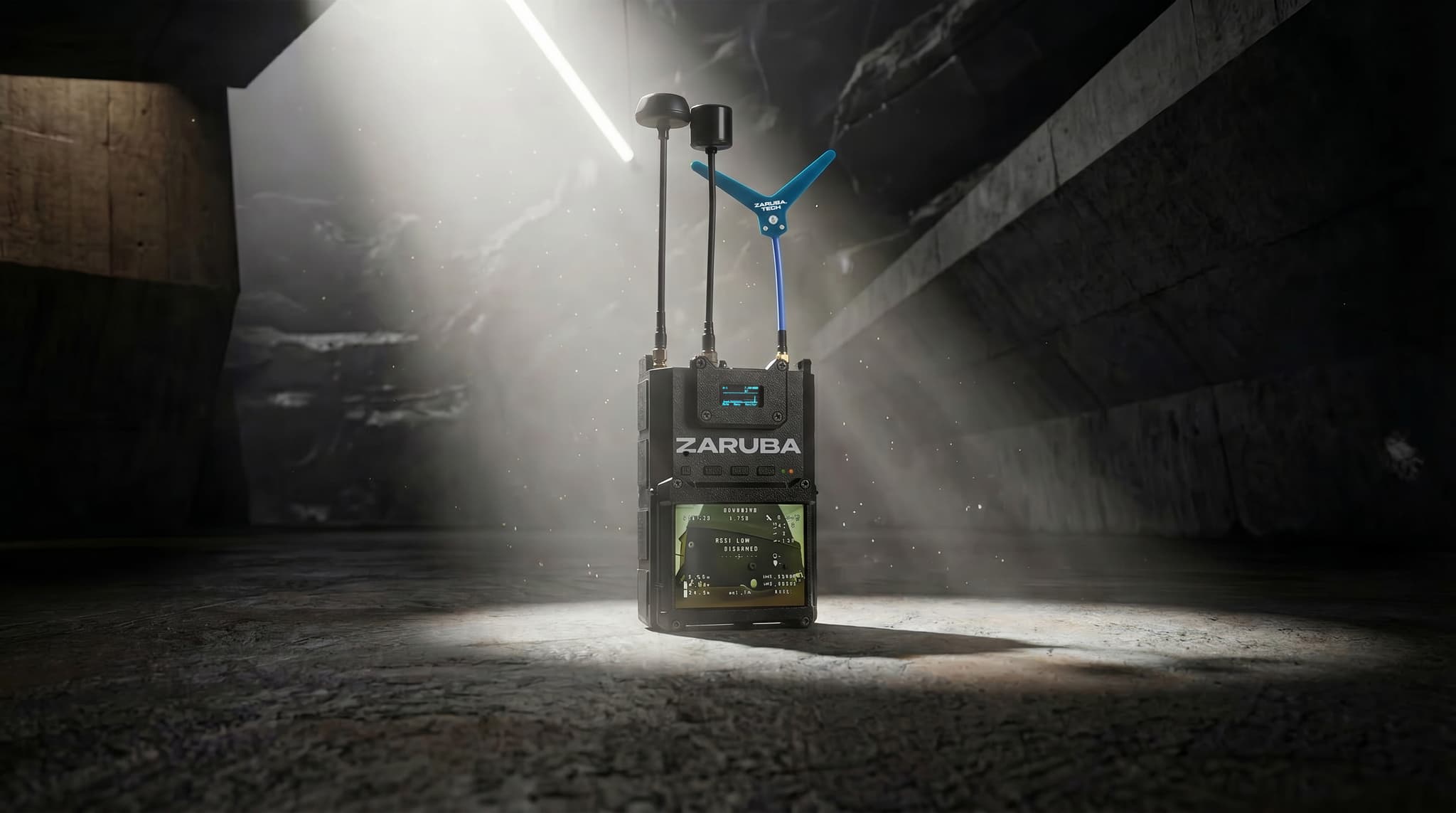
The Zaruba A3 detector, for example, is a passive RF detection device designed to monitor selected RF bands associated with drone activity. Its portable form factor lets it serve as a mobile detection layer rather than a replacement for fixed radar, EO/IR, or other systems.
Working with Zaruba Tech gives you direct access to Zaruba A3 manufacturer’s engineering expertise and technical support. This can help you customize drone detection solutions to specific operational requirements and integrate them into existing counter-UAS architectures.