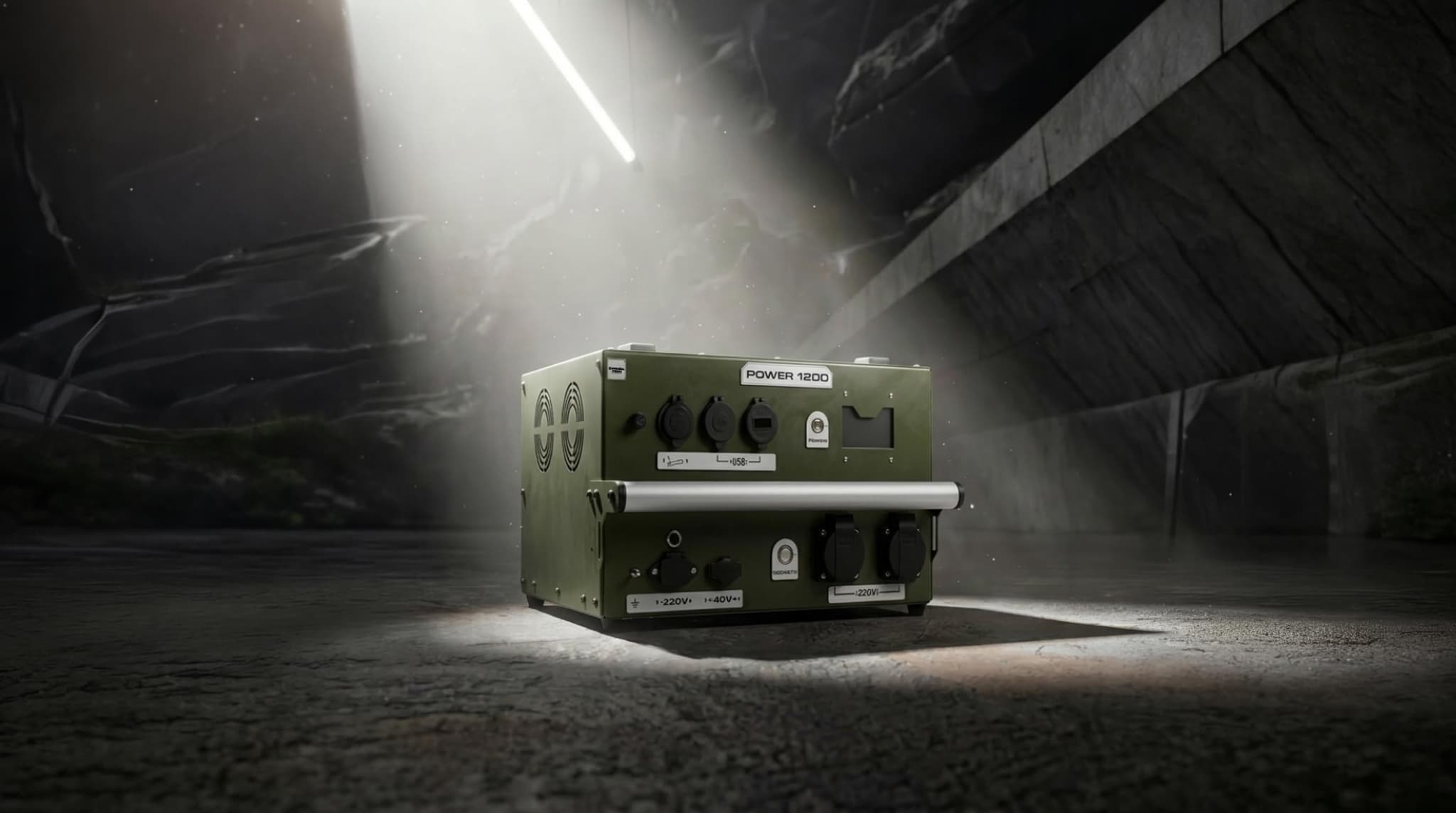
Zaruba Power Station for Field Power & Tactical Equipment
The portable power system is designed for autonomous operation in field conditions.
Video review of the device
[ Video review ]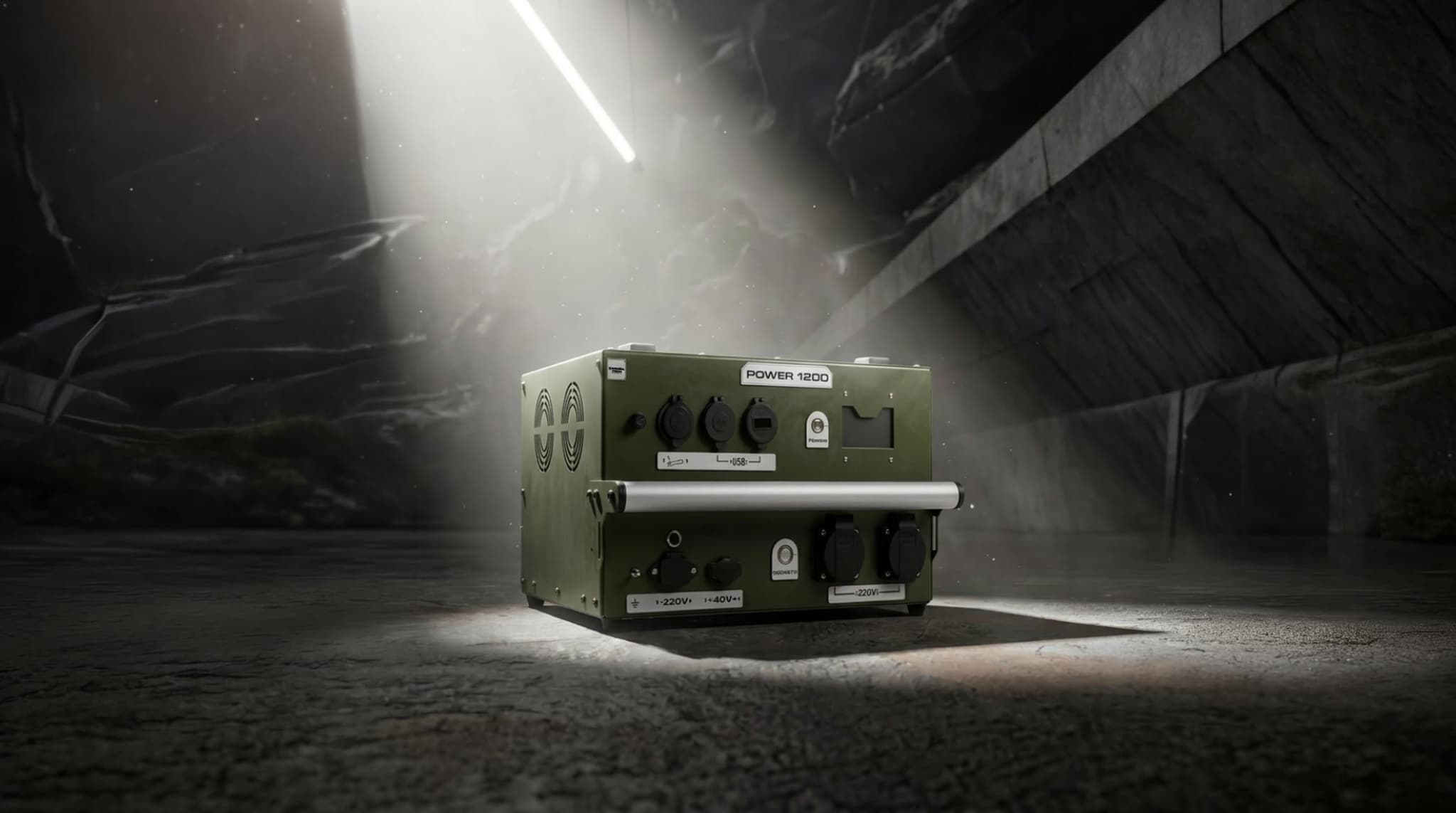
Zaruba Power Station gallery
Modifications of Zaruba Power Station
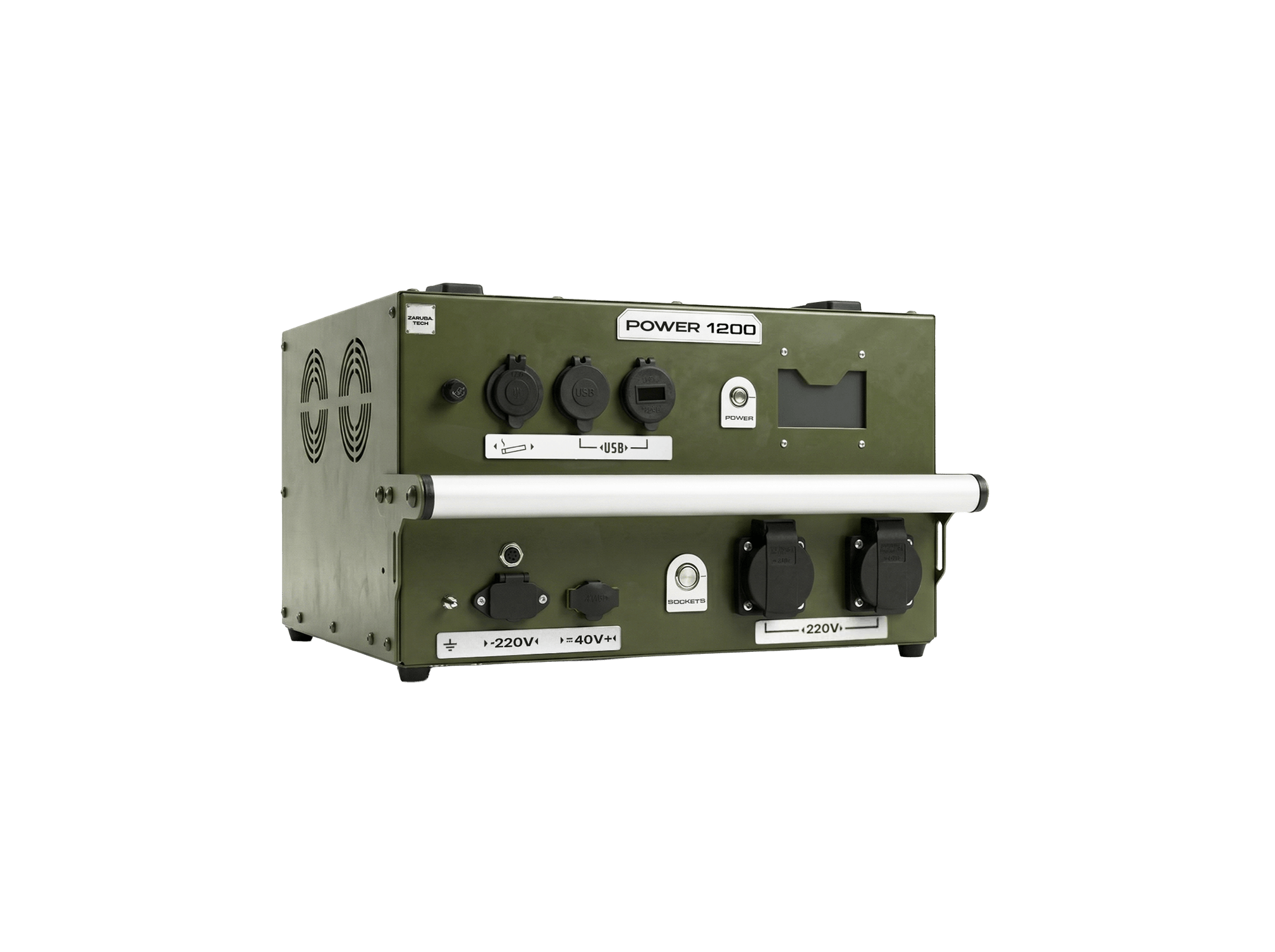
“Zaruba Power 1200” charging station
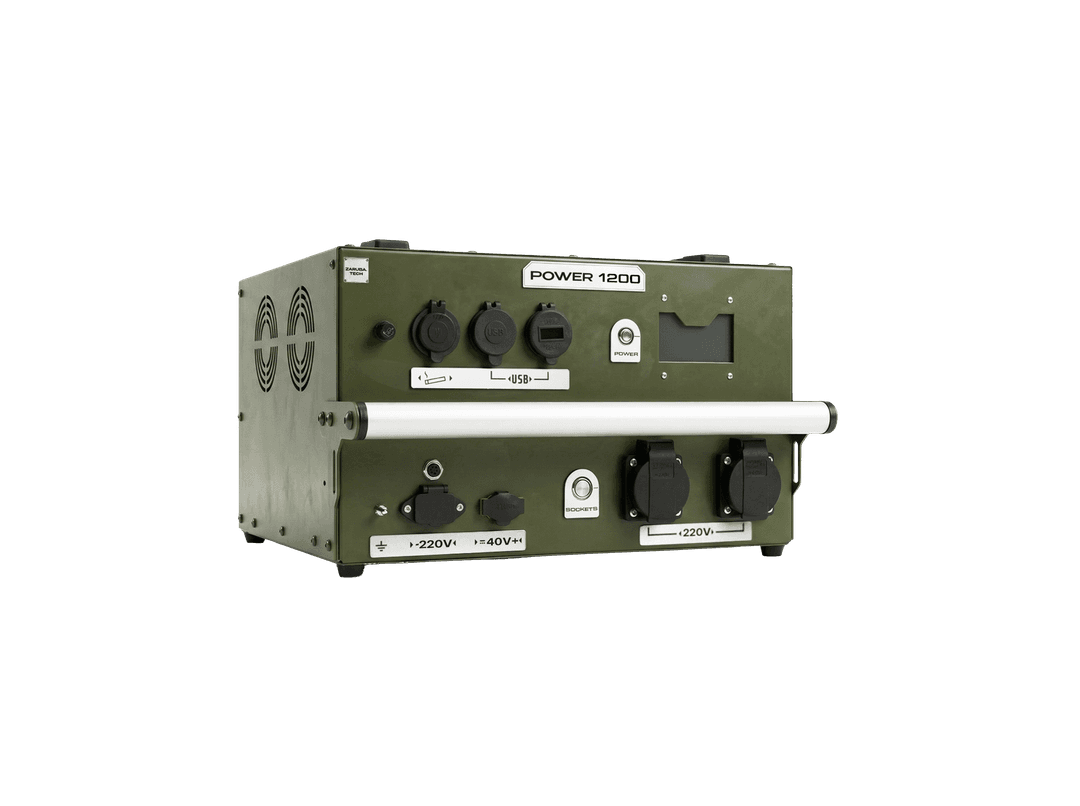
“Zaruba Power 28” charging station
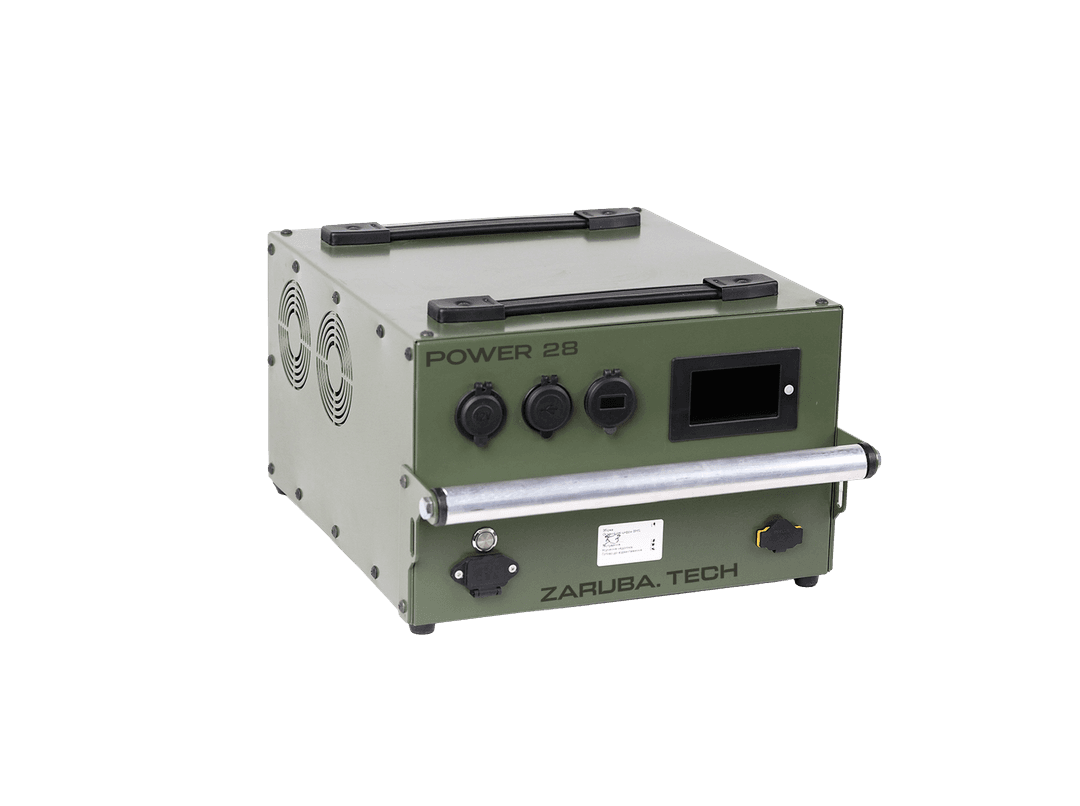
Zaruba Power Charging Station description
The “Zaruba Power” charging station is an autonomous power source designed for stable operation in conditions of complete or partial lack of external electricity supply. The “Zaruba Power” is used to power EW systems, drones, ground-based repeaters, radios, telemetry modules, laptops, lighting, and other critical electronics, ensuring continuous operation of equipment without the risk of overloads or voltage instability.
Contact usKey features of Zaruba Power Station
Autonomous power supply for equipment in field conditions
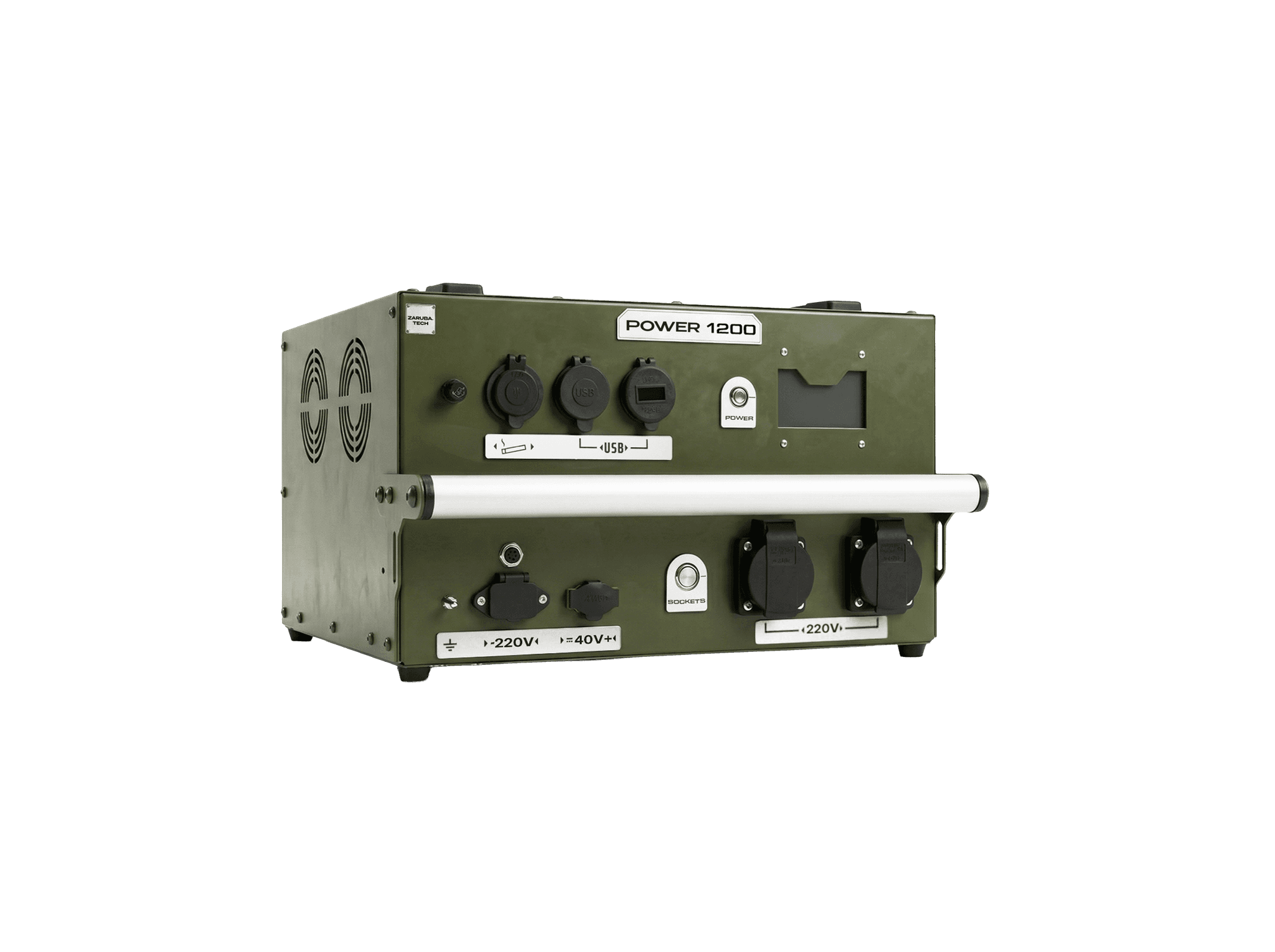
Autonomous power supply for equipment in field conditions
Technical characteristics of Zaruba Power Station
The station is built around a LiFePO4 battery, known for its enhanced safety and resistance to overheating and physical damage.
A lifespan of up to 3,500 charge cycles at +77 °F ensures long-term operation without significant capacity loss.
The metal shock-resistant casing provides mechanical protection for the internal modules.
The operating temperature range is from -4 °F to +113 °F.
The system supports charging from a standard 220 V power grid for all models, while additional solar panel charging is available only for the “Zaruba Power 1200” thanks to the built-in MPPT controller, which ensures efficient energy storage.
The production and technical support of the “Zaruba Power” charging station are provided by Zaruba Tech.
FAQ
The Zaruba Power charging station supports continuous operation of field communication systems thanks to a high-capacity LiFePO4 battery, which stores enough energy to power equipment autonomously for extended periods. The station provides stable power supply through connections to communication devices, power banks, and other electronics. Additionally, the Zaruba Power can be charged via a solar panel, allowing it to operate in the field even without access to stationary power. .
High energy storage capacity allows the charging station to power multiple devices for extended periods without recharging. This is especially important for long-duration operations where access to external power sources is limited or unavailable.
Silent operation reduces acoustic and thermal signatures, which is critical in tactical and reconnaissance scenarios. Unlike traditional generators, portable charging stations operate quietly, helping maintain stealth and operational security.
The Zaruba Power stations are designed for rapid deployment. Thanks to their compact size, metal housing, and pre-configured outputs, they can be quickly transported, connected, and immediately used to power equipment or charge devices. This is especially important in field conditions where there is no time for complex setup.
The Zaruba Power 1200 model is equipped with two 220 V AC outlets, a 12 V car cigarette lighter output, and four USB Quick Charge 3.0 ports, including Type-A and Type-C. This combination allows connection of sensitive 220 V equipment as well as mobile devices, radios, power banks, and other gear.
The efficiency of a charging station is determined by the type of battery, the stability of the output voltage, and the ability to charge quickly. Zaruba Tech stations use LiFePO4 batteries, which have a lifespan of up to 3,500 cycles at +25 °C, and support fast charging from both the grid and solar panels via an MPPT controller. This enhances the reliability and longevity of the station in field conditions.
The Zaruba Power stations have multiple safety features, including overvoltage protection, temperature control, short-circuit prevention, and intelligent battery monitoring. These systems ensure safe operation even under high loads.
Portability allows the station to be quickly moved between positions and used where there is no access to the power grid. The Zaruba Power 1200 weighs 17 kg, and the Zaruba Power 28 weighs 15 kg, making them suitable for transport and field operations. Their compact size and durable metal housing further enhance ease of use.
High-quality charging stations are designed for minimal maintenance. Routine checks typically include monitoring the battery condition, ensuring clean connections, and verifying system diagnostics available through built-in interfaces.