Detecting drone activity requires technologies that can identify communication signals without disrupting the surrounding environment. Handheld drone detectors use RF monitoring to analyze radio frequency emissions from drones, controllers, and video transmission systems. Understanding how these devices work helps explain their role in modern drone detection strategies.
What Is a Handheld Drone Detector?
A handheld drone detector is a portable device that identifies nearby drone activity by analyzing signals associated with unmanned aerial systems. Unlike systems that rely on cameras, radar, or active transmissions, many portable detectors use passive RF technology to monitor the electromagnetic environment and detect radio frequency emissions produced by drones and their control systems.
These devices are commonly used for situational awareness in locations where unauthorized drone activity may create security, privacy, or operational risks. Their compact size allows operators to carry and deploy them quickly in different environments, from outdoor events and critical infrastructure sites to field operations.
A handheld drone detector does not control or interfere with a drone. Instead, it focuses on detecting available signals, helping users understand whether drone-related RF activity is present nearby.
How Portable RF Detection Works
Most portable RF detection systems scan radio frequency bands used by drones, remote controllers, and video transmission equipment. When a drone communicates with its operator, it creates RF emissions that detectors can identify and analyze.
The process typically includes three main steps:
- Signal scanning – The detector monitors selected frequency ranges where drone communication systems commonly operate.
- Signal analysis – The device evaluates detected RF activity to determine whether it matches characteristics associated with drone equipment.
- User notification – The system provides alerts when potentially relevant signals are identified.
Because RF detection works by receiving existing signals rather than transmitting its own, passive systems can operate without sending energy toward the drone or affecting its communication link.
This approach is especially relevant for FPV drone detection, as many FPV systems rely on radio links between the drone, controller, and video transmission equipment.
Components of a Handheld Drone Detector
Although designs vary between models, most handheld drone detectors include several key components:
- RF receiver modules that capture signals across supported frequency ranges.
- Antennas that collect RF emissions from different directions and bands.
- Signal processing hardware that analyzes detected activity.
- Display interface showing detection information.
- Alert systems such as audio signals, LEDs, or notifications.
- Battery systems that support portable operation in the field.
Together, these components enable a compact device to perform tasks that previously required larger, fixed monitoring systems.
Antennas and Frequency Coverage
Antennas are one of the most important parts of any portable RF detection system. Different drones and FPV setups may operate on different frequency bands, so detection performance depends partly on the detector’s supported coverage.
A handheld drone detector may use multiple antennas or antenna configurations to monitor several frequency ranges. For example, FPV equipment commonly operates in bands such as 1.2 GHz, 2.4 GHz, and 5.8 GHz, depending on the system configuration.
Multiple antennas help improve detection flexibility by allowing the device to monitor signals from different types of drone equipment. Antenna design, placement, and frequency range all affect how effectively the detector can identify RF activity in different environments.
Scanning and Detection
During operation, a handheld drone detector continuously scans configured frequency ranges for RF signals. The system evaluates characteristics such as frequency, signal strength, and transmission patterns to identify activity that may be associated with drones.
Advanced detection systems can distinguish between general RF noise and signals that match drone communication patterns. However, detection does not always mean complete identification. A detector may confirm relevant RF activity without identifying the exact drone model or operator location.
This process is particularly useful because FPV drones often rely on dedicated radio links for control and video transmission. Detecting these signals can provide early awareness of nearby drone activity.
Audio and Visual Alerts
Portable detectors typically provide immediate feedback through audio and visual alerts.
Common alert methods include:
- LED indicators showing detection status.
- Screens displaying frequency or signal information.
- Audio warnings that allow operators to monitor activity without looking at the device continuously.
Clear alerts are important for field deployment, where users may need to react quickly while maintaining awareness of their surroundings.
Detection Range
The detection range of a handheld drone detector depends on multiple factors, including:
- Drone transmission power.
- Frequency band being used.
- Antenna design.
- Environmental conditions.
- Obstacles between the detector and the drone.
- RF interference from other devices.
Manufacturers may provide estimated ranges under specific testing conditions, but real-world performance can vary significantly. Open areas with fewer obstacles generally provide better detection conditions than dense urban environments with high levels of RF activity.
Battery Life and Field Deployment
Portability is a key advantage of handheld detection systems. Battery-powered operation lets users deploy detectors where fixed infrastructure is unavailable.
Important factors for field use include:
- Operating time per charge.
- Charging options.
- Device weight.
- Environmental protection.
- Ease of carrying and setup.
A practical handheld system should balance detection capabilities with mobility, allowing operators to use it during patrols, inspections, or temporary security deployments.
Handheld vs Fixed Drone Detection Systems
Handheld and fixed drone detection systems serve different operational needs.
Fixed systems are typically installed permanently at a specific location. They can provide continuous monitoring over a defined area and are often integrated into larger security networks.
Handheld systems focus on mobility. They let operators move between locations and detect threats where needed without installation.
The choice between the two depends on the operational environment. Fixed systems may suit permanent monitoring applications, while handheld detectors are useful when flexibility and rapid deployment are priorities.
Advantages and Limitations
Handheld drone detectors offer several advantages:
- Portability – Operators can carry and deploy the device quickly.
- Rapid awareness – Detection can provide early notification of nearby drone activity.
- Passive operation – RF monitoring does not require signal transmission.
- Flexible deployment – Devices can be used in different locations without complex installation.
However, portable RF detection also has limitations:
- Detection range depends on environmental conditions.
- Some drones may use frequencies outside the detector’s coverage.
- RF noise can affect detection performance.
- Detection does not always provide full information about the drone or operator.
For these reasons, handheld drone detectors are often used as part of a broader security approach rather than as a standalone solution.
What to Look for When Choosing One
When selecting a handheld drone detector, users should consider several technical factors:
Frequency coverage
The device should support the frequency bands relevant to the drones expected in the operational environment.
Detection technology
Passive RF technology provides detection without active transmission, which may be important for certain applications.
Portability
Weight, battery life, and physical design affect usability during field operations.
Alert system
Clear visual and audio notifications help operators understand detected activity quickly.
Target applications
Different environments may require different detection capabilities, from general drone awareness to specialized FPV drone detection.
Zaruba A3 as a Portable Detection System
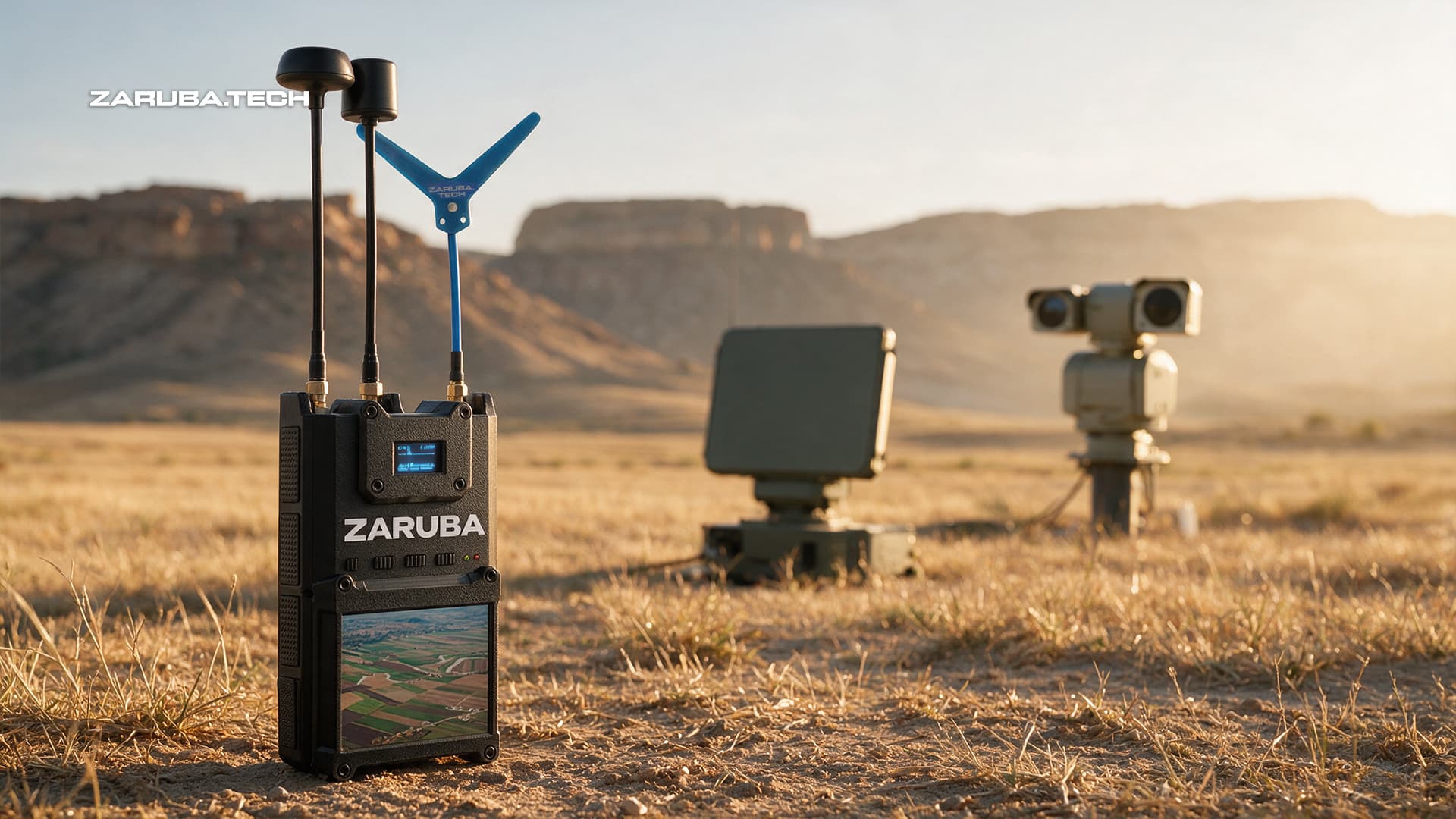
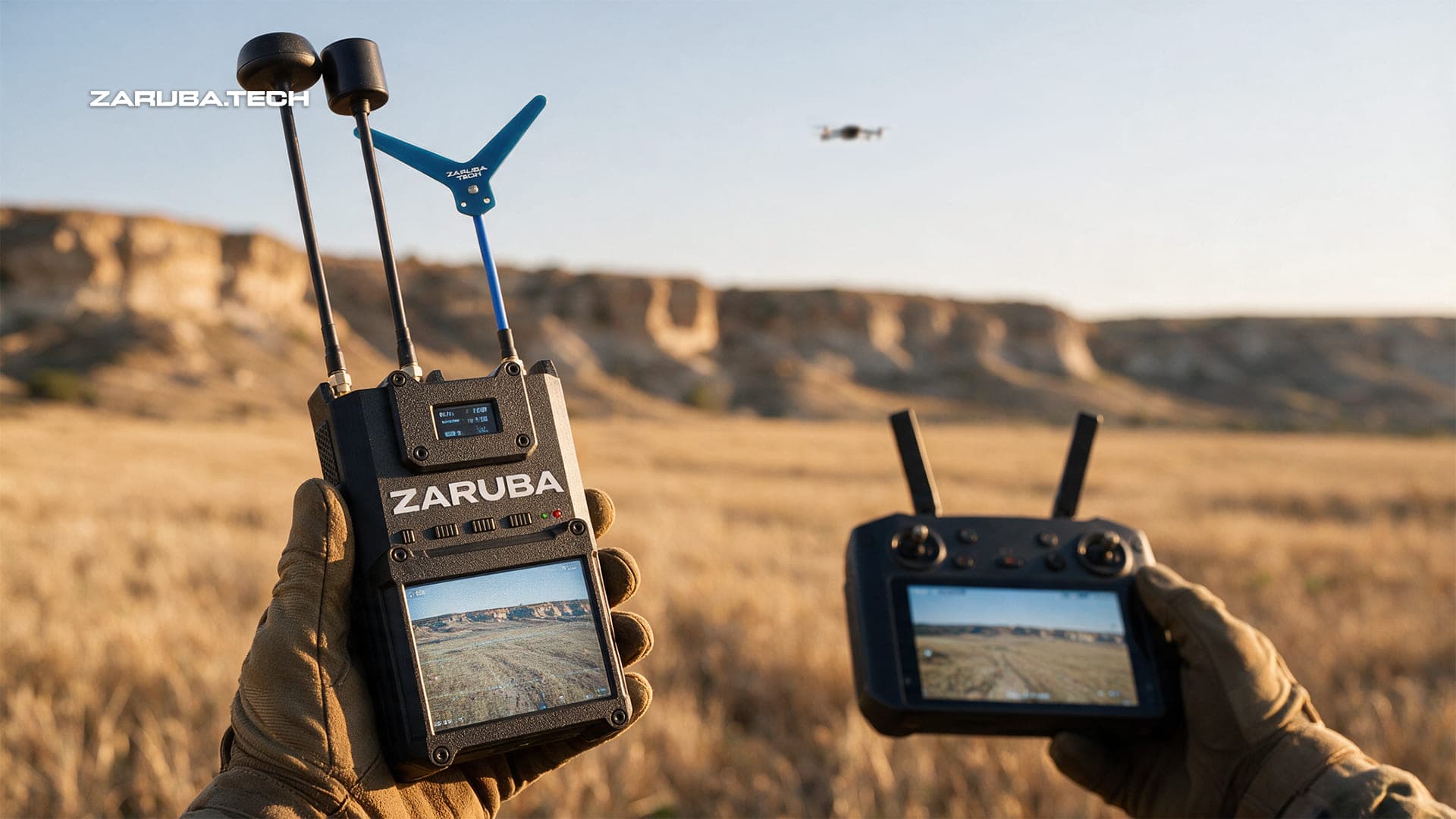
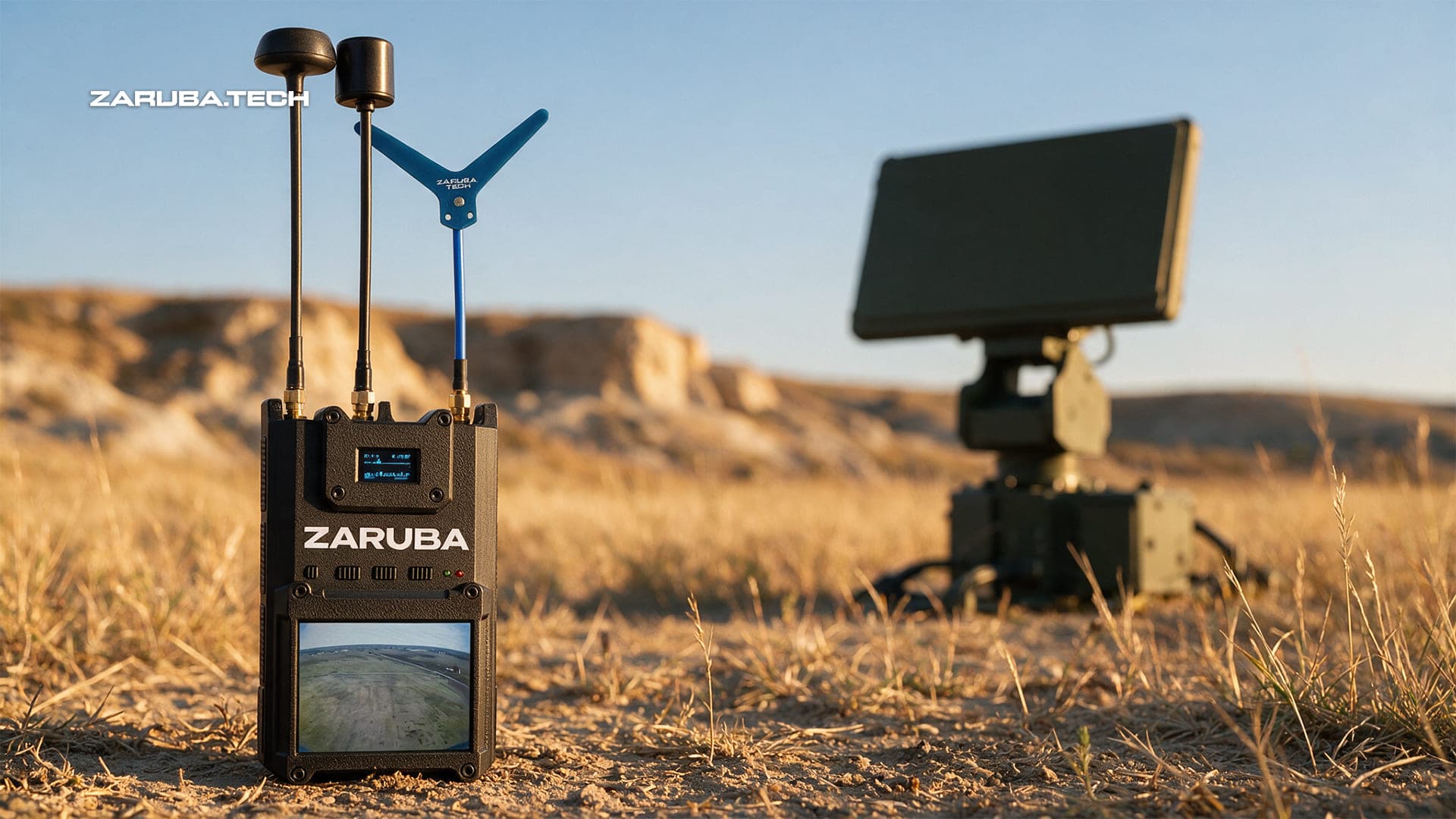
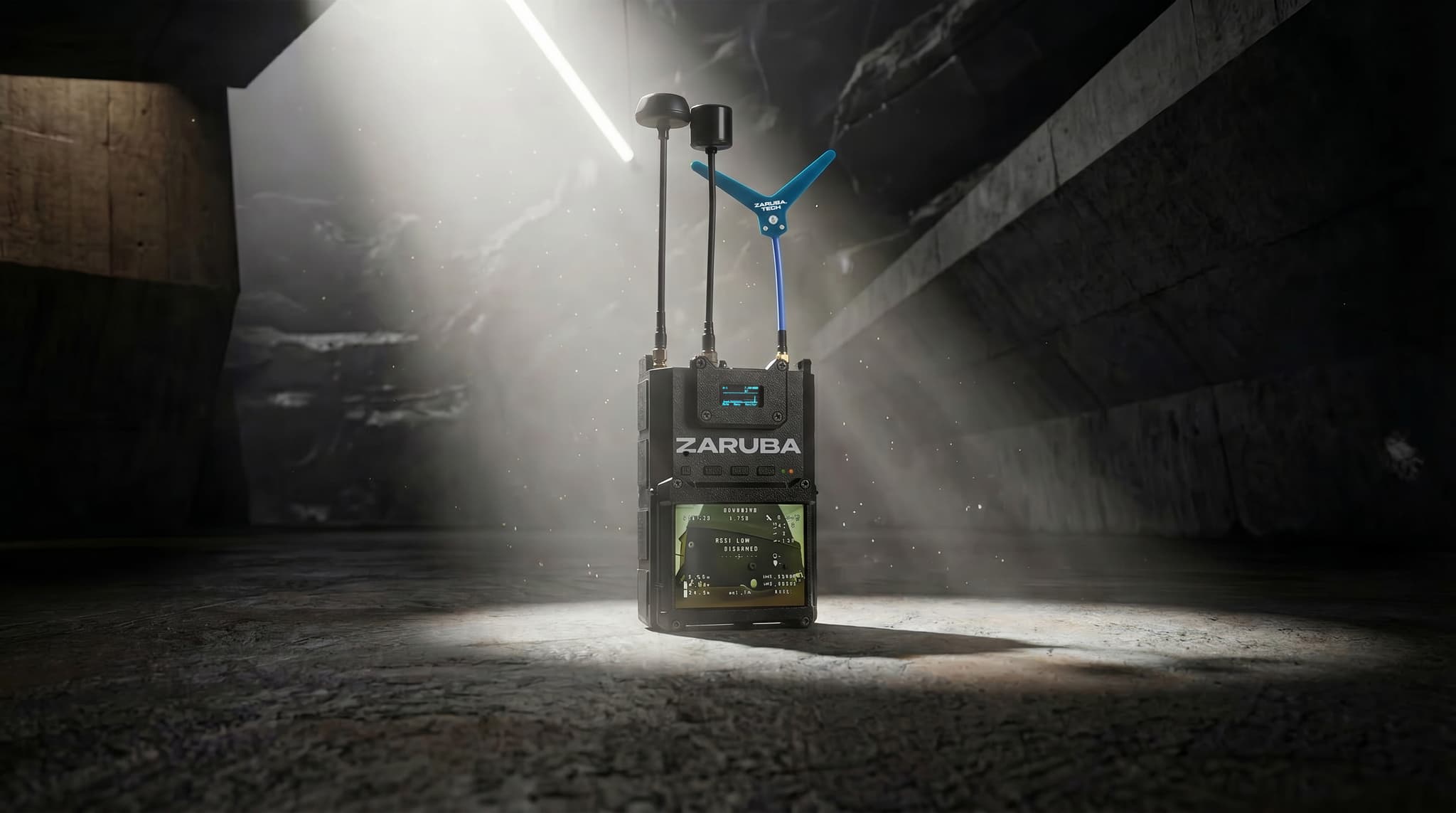
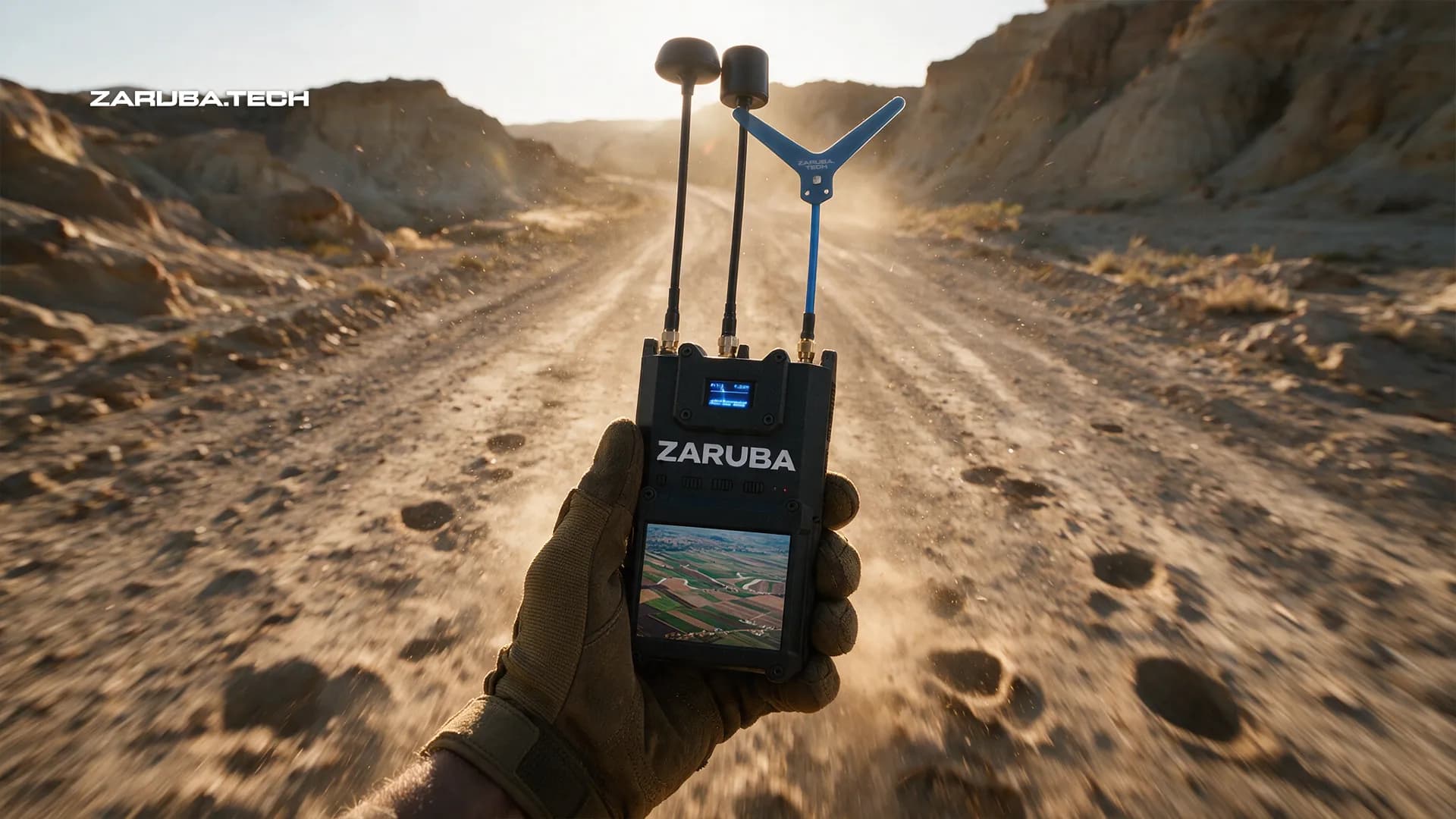
The Zaruba A3 detector is a portable detection system designed to identify drone-related activity using passive RF technology. Instead of transmitting signals, the device monitors selected frequency ranges and analyzes emissions produced by drone communication systems.
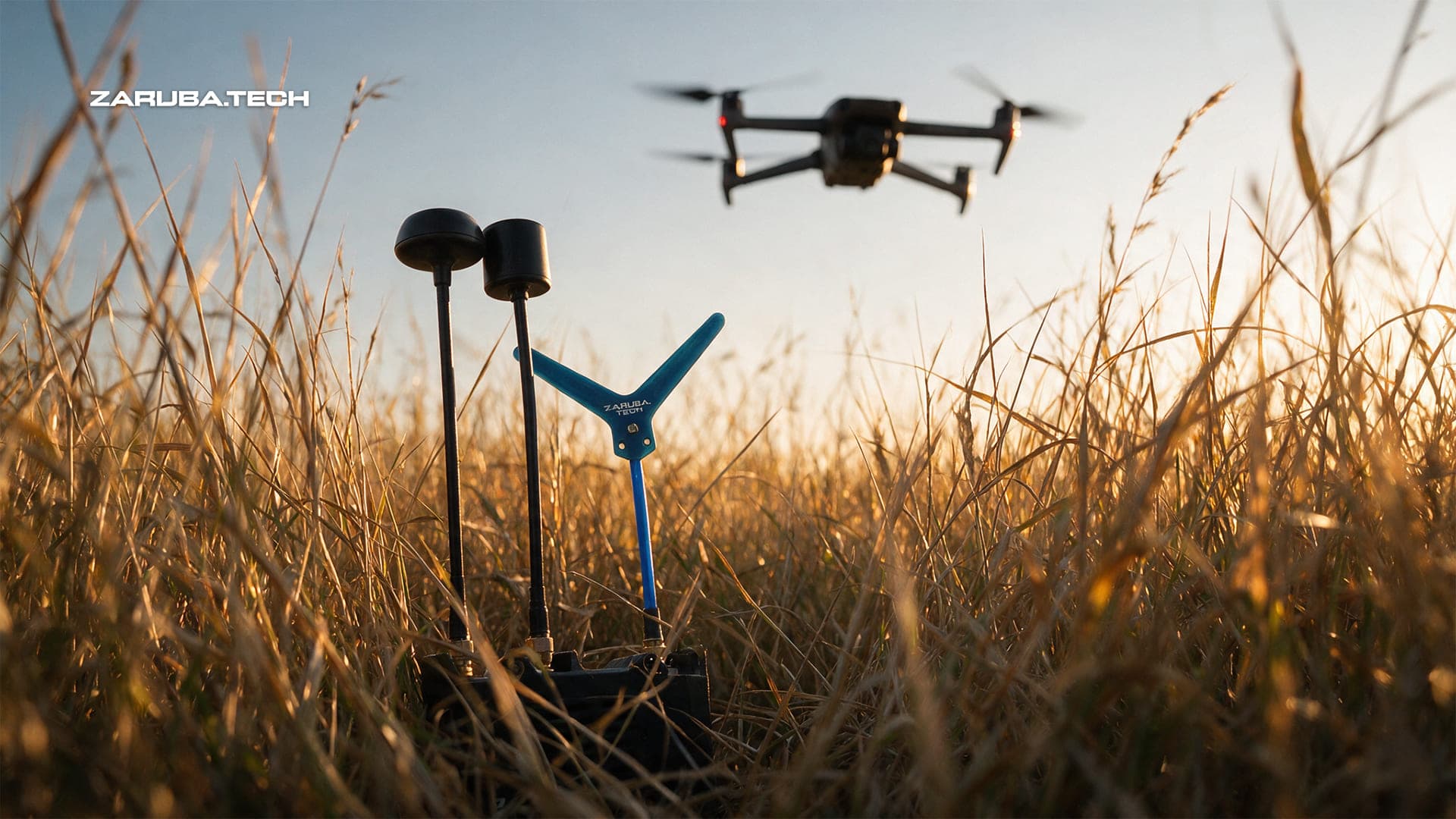
The system is designed for mobile use, allowing operators to carry the detector and deploy it in different locations. Its tri-band antenna configuration supports monitoring of several commonly used FPV frequencies, helping detect activity from different types of drone equipment.
Zaruba A3 detector focuses on identifying RF signals associated with FPV control links and video transmission systems. By analyzing existing emissions in the environment, it provides users with awareness of nearby drone activity without interfering with drone operation.
A portable detection system such as the Zaruba A3 can support security teams, infrastructure operators, and field personnel who need a flexible way to monitor RF activity and improve situational awareness.