RF Drone Detection vs Radar: Key Differences Explained
Detecting drones requires understanding how different sensing technologies identify aerial objects. Two commonly discussed approaches are RF drone detection and radar-based detection. While both technologies support drone monitoring, they rely on different principles and provide different types of information.
RF Drone Detection vs Radar at a Glance
RF detection focuses on identifying radio frequency emissions produced by drones and their control systems. Radar, by contrast, detects physical objects by transmitting signals and analyzing their reflections.
The choice between these technologies depends on the operational environment, drone type, required detection range, and the system's role within broader detection sensor layers. Many modern counter-UAS solutions combine RF and radar technologies to provide more complete situational awareness.
RF Drone Detection | Radar Detection | |
Detection principle | Identifies radio frequency emissions from drones and controllers | Detects physical objects by analyzing reflected signals |
Signal transmission | No | Yes |
Depends on drone RF activity | Yes | No |
Main information provided | RF activity, signal presence, and characteristics | Object location, movement, and tracking data |
Typical role | Early awareness and RF monitoring | Physical detection and tracking |
How RF Drone Detection Works
RF drone detection systems monitor the electromagnetic environment to identify signals associated with drone communication links. Most consumer and professional drones rely on radio communication between the aircraft, remote controller, video transmitter, and other onboard systems.
A passive RF detection system receives and analyzes these existing emissions without transmitting its own signal. Instead of actively searching for a drone by sending energy into the environment, it listens for relevant RF activity and identifies patterns that may indicate drone operation.
This approach allows RF detectors to provide early warning when a drone is communicating through known frequency ranges. Depending on the system design, detection capabilities may include identifying signal bands, estimating signal strength, and helping operators understand possible drone activity in the surrounding area.
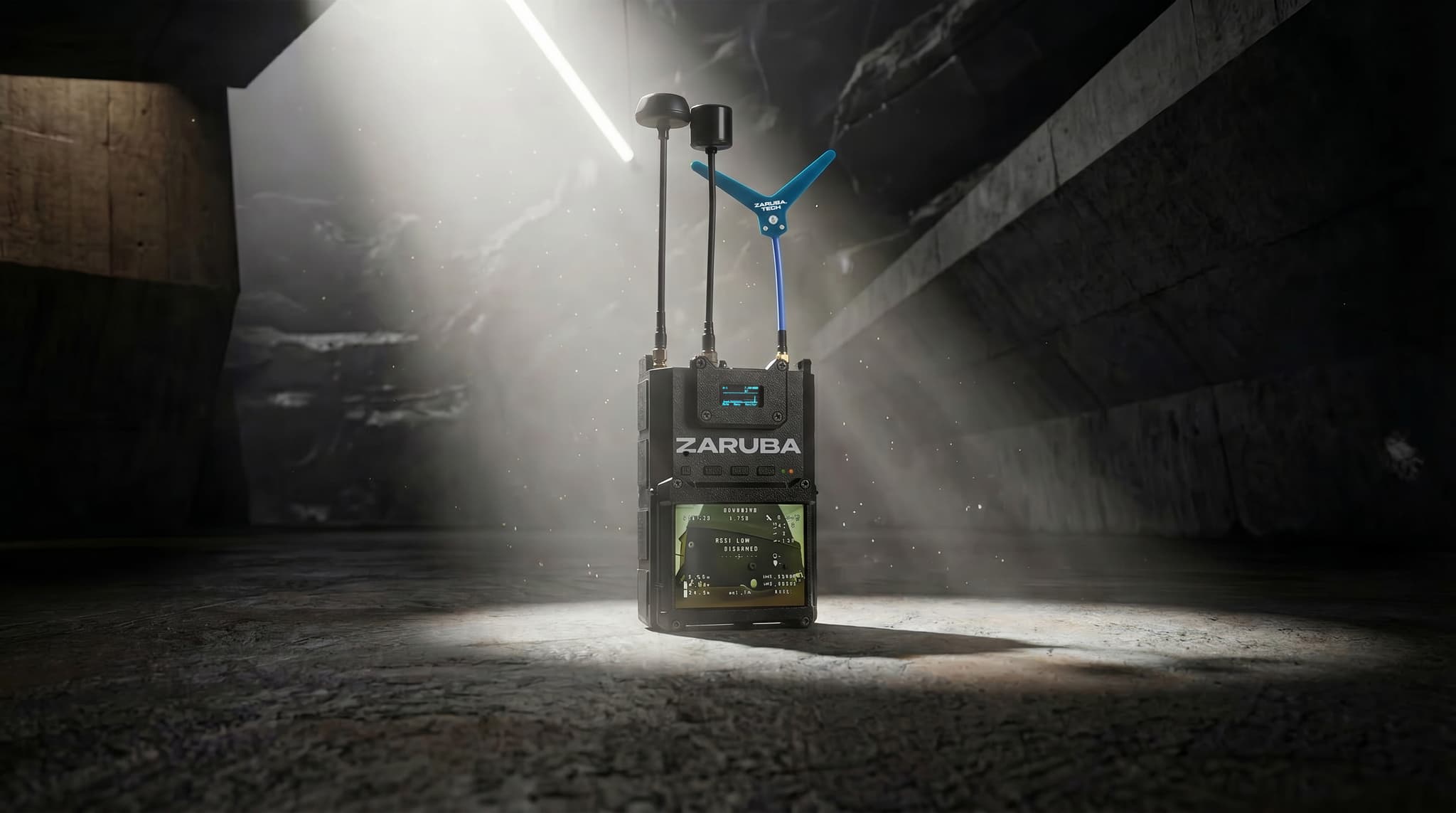
For example, the Zaruba A3 portable drone detector uses passive monitoring technology to scan selected RF bands commonly associated with FPV equipment and other drone communication systems. Because it does not transmit signals, it does not interfere with drone communications.
Key A3 technical specifications include:
- Passive RF monitoring without signal transmission;
- Detection of selected frequency ranges commonly used by FPV equipment;
- Compact portable design for flexible deployment;
- Built-in battery operation for mobile use;
- Support for field monitoring where rapid setup is required.
How Drone Detection Radar Works
Radar systems operate differently. Instead of monitoring existing emissions, radar actively sends out electromagnetic signals and analyzes the reflections returned from objects in the environment.
When a drone enters the radar coverage area, the system detects changes in reflected signals and uses this information to estimate the object's position, movement direction, and distance. Advanced radar systems can provide continuous tracking data and operate independently of whether the drone is transmitting RF signals.
Because radar detects physical objects rather than communication activity, it can identify drones even when their radio links are limited, encrypted, or unavailable. However, performance depends on radar design, environmental conditions, and the target's size and movement characteristics.
Passive vs Active Detection
The main difference between RF detection and radar is whether the system actively transmits signals.
RF detection is passive. It relies on receiving existing RF emissions from drones, controllers, or video transmitters. This makes it difficult for the detected object to identify that it is being monitored.
Comparing RF drone detection vs radar, the latter is active. It sends signals into the environment and analyzes their reflections. This lets radar detect physical objects regardless of their communication systems, but it also requires the system to operate as a transmitter.
Both approaches have advantages depending on the mission. Passive RF detection can provide discreet early warning, while radar can offer additional tracking capabilities.
Detection of Small and Low-Flying Drones
Small UAV detection remains a major challenge in drone monitoring. Compact FPV drones and lightweight quadcopters can operate close to the ground, move quickly, and have a smaller physical profile than traditional aircraft.
RF detection can be effective when a drone relies on active communication links. FPV drones, for example, often transmit video and control signals that create detectable RF activity.
Radar performance depends on factors such as radar frequency, antenna design, target size, and environmental background. Small drones flying near buildings, trees, or other obstacles can be more difficult to separate from surrounding objects.
For this reason, many counter-UAS architectures combine several technologies rather than relying on a single detection method.
Range and Line-of-Sight
Detection range depends on many factors, including terrain, interference, antenna characteristics, drone technology, and operating conditions.
RF systems require access to detectable RF emissions. Signal strength, frequency selection, and whether the drone uses a detectable communication link can affect their effectiveness.
Radar systems typically require line-of-sight between the radar and the target. Physical obstacles, terrain features, and weather conditions may influence performance.
Neither technology provides unlimited detection capability in every environment. Proper placement and integration with other sensors are essential for reliable monitoring.
RF Environment vs Physical Environment
RF detection and radar analyze different types of information.
RF systems evaluate the electromagnetic environment. They look for signals that indicate communication between drones and operators.
When comparing RF drone detection vs radar, radar evaluates the physical environment. It searches for objects that reflect transmitted signals.
This distinction explains why the technologies can complement each other. A drone may be physically present but produce limited RF activity, or it may generate RF emissions that provide early warning before visual confirmation is possible.
Portability and Deployment
Portability is one area where RF detection systems often have an advantage. Compact RF detectors can be designed for mobile teams, temporary observation points, and locations that require rapid deployment.
Portable radar systems are also available, but their size, power requirements, antenna configuration, and operational setup can vary significantly by intended use.
For applications requiring flexible deployment, a portable RF detector can serve as an accessible first layer of drone awareness.
RF Detection Limitations
Despite its advantages, RF detection has several limitations.
Because it relies on drone-related transmissions, it may not detect drones that operate without detectable RF communication. Autonomous drones, pre-programmed flights, or systems using different communication methods may require additional sensing technologies.
RF environments can also contain interference from other electronic devices. Proper signal analysis is necessary to distinguish drone activity from unrelated RF sources.
Radar Limitations
Radar also has limitations. Small drones can be challenging to detect because of their size, materials, and flight characteristics.
Environmental factors such as buildings, vegetation, terrain, and weather can affect radar performance. In complex environments, radar may require additional sensors to improve identification and reduce false detections.
Radar systems can provide valuable tracking information, but they may not always offer the earliest indication of drone communication activity.
Why Counter-UAS Systems Use Multiple Sensor Types
Modern counter-UAS solutions often rely on multiple detection technologies working together. Instead of replacing one technology with another, different sensors provide complementary information.
A layered approach may include:
- RF sensors for detecting drone communication activity;
- radar systems for physical object detection and tracking;
- optical or thermal cameras for visual confirmation.
These detection sensor layers allow operators to build a more complete picture of the airspace and make better decisions.
Which Detection Technology Fits Which Scenario?
The right technology depends on the operational goal.
RF detection is often suitable when early awareness, mobility, and passive monitoring matter. It can help identify drone activity by detecting communication signals before visual confirmation.
Radar is better suited for scenarios that require continuous tracking and detection of physical objects.
In many cases, combining both technologies provides broader coverage and reduces the limitations of relying on a single sensor type.