RF Detection vs Remote ID: Understanding the Difference in Drone Detection Technologies
As drone use expands across commercial, recreational, and industrial environments, organizations need reliable ways to identify and monitor unmanned aircraft activity. Airports, critical infrastructure operators, government facilities, and security teams increasingly rely on layered drone detection approaches that combine different technologies to improve situational awareness.
Two commonly discussed technologies are Remote ID and RF detection. Although both can help identify drone activity, they operate in fundamentally different ways.
Remote ID is a cooperative identification technology: it depends on the drone broadcasting information about itself. In contrast, RF detection analyzes radio frequency activity and signals in the surrounding environment, allowing security teams to detect communication links even when a drone does not actively provide identification data.
Understanding the difference between RF detection vs Remote ID is essential when selecting the right technology for a specific security application.
What Is Remote ID?
Remote ID is a system that allows drones to broadcast identification and location information during flight. It works similarly to a digital license plate, providing information that helps authorities and other authorized users identify an operating drone.
In the United States, the Federal Aviation Administration (FAA) introduced Remote ID requirements to improve drone accountability and airspace awareness.
Remote ID signals are typically transmitted through standard wireless technologies, such as Wi-Fi or Bluetooth, and compatible devices within range can receive them.
Because Remote ID relies on the drone transmitting the information, it is considered cooperative detection. The system works when the drone participates by broadcasting the required data.
What Is RF Drone Detection?
Comparing RF detection vs Remote ID, RF detection focuses on identifying radio frequency activity associated with drones and their communication systems. Instead of waiting for a drone to provide identification information, RF detection equipment monitors the electromagnetic environment for signals that may indicate drone operations.
A passive RF detection system listens for existing radio frequency emissions without transmitting signals back into the environment. This lets security teams analyze drone-related communication activity without interfering.
RF detection can analyze signals associated with:
- Drone-to-controller communication;
- Video transmission links;
- Telemetry signals;
- Other RF activity patterns connected with drone operations.
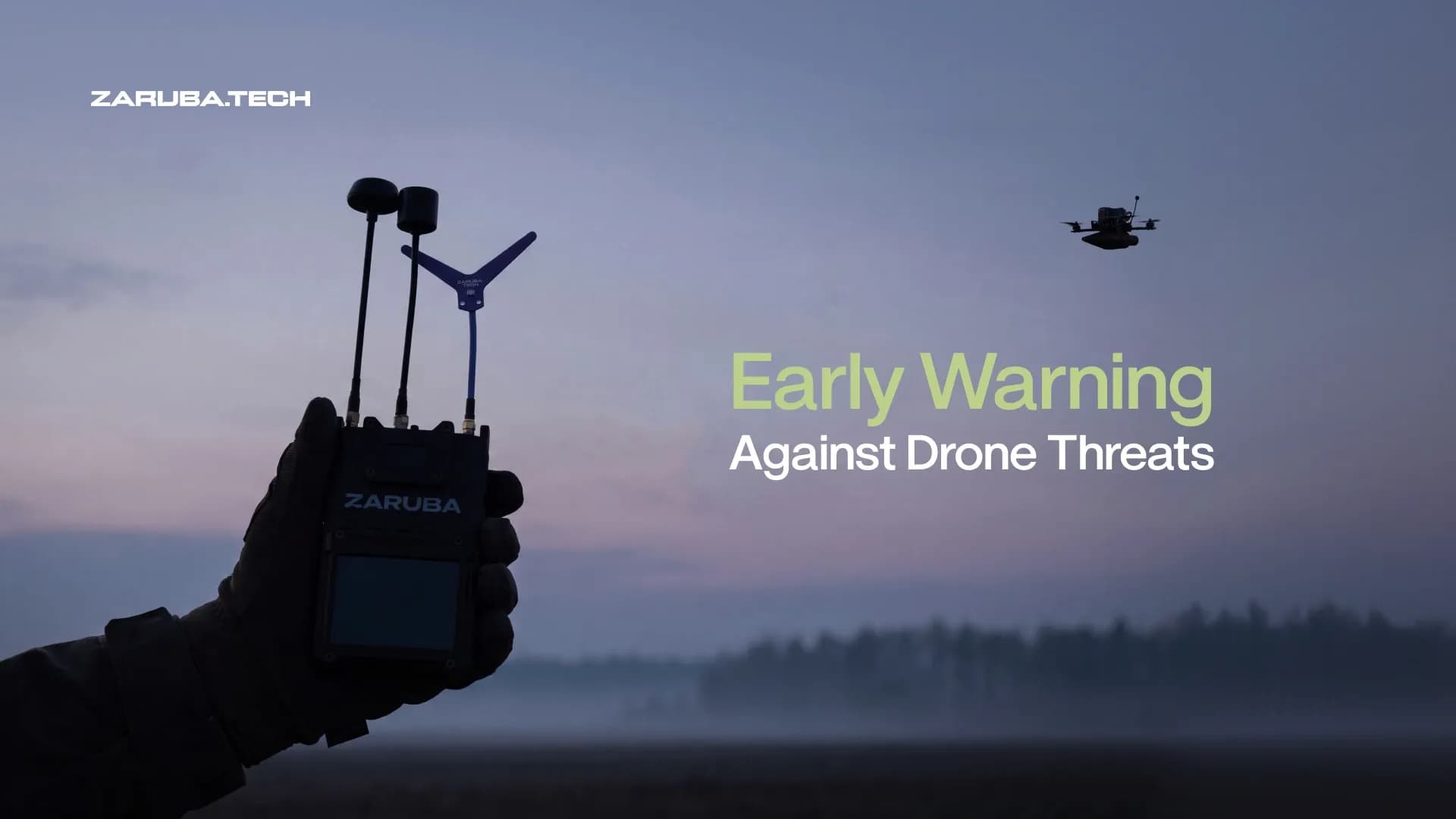
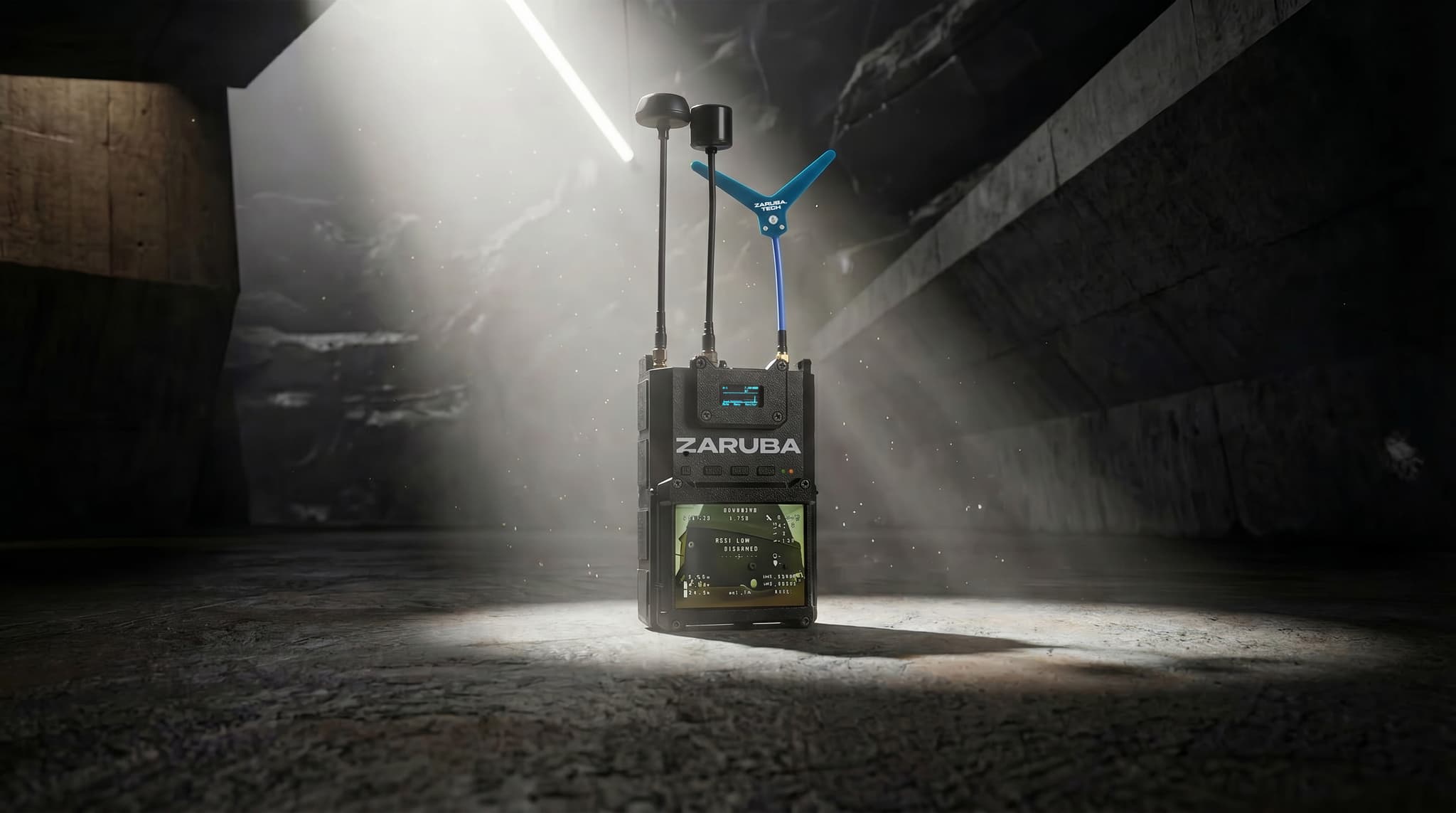
For example, the Zaruba A3 detector uses passive RF monitoring to identify drone-related signals across selected frequency ranges. It does not transmit signals or interfere with drone communication. Instead, it detects and analyzes existing RF emissions.
RF Detection vs Remote ID Comparison
Although Remote ID and RF detection both contribute to drone awareness, they provide different types of information.
Feature | Remote ID | RF Detection |
Detection approach | Cooperative identification | Signal analysis |
Requires drone participation | Yes | No |
Main purpose | Identifying compliant drones | Detecting RF activity associated with drones |
Information source | Drone broadcast data | Radio frequency emissions |
Works with non-compliant drones | Limited | Possible, depending on RF activity |
Provides drone identification | Yes, when available | Usually focuses on signal characteristics |
Typical applications | Airspace awareness, regulatory compliance | Security monitoring, infrastructure protection |
Remote ID answers the question: “What information is this drone broadcasting about itself?”
RF detection answers a different question: “Is there drone-related RF activity in this area?”
For many security applications, these capabilities address different parts of the detection process.
What Information Can Remote ID Provide?
When available, Remote ID can provide valuable identification and tracking information. Security teams may use this data to understand:
- Which drone is operating;
- Where the drone is located;
- Where it started its flight;
- Where the operator or control station may be located.
This makes Remote ID useful for environments where drone operators are expected to follow regulations and operate compliant equipment.
However, Remote ID does not provide complete visibility into all drone activity. It depends on several factors, including:
- Whether the drone supports Remote ID;
- Whether the system is functioning correctly;
- Whether the broadcast signal can be received;
- Whether the drone operator is following applicable requirements.
What Can RF Detection Detect?
RF detection identifies communication signals and patterns associated with drone activity. Unlike Remote ID, it does not require the drone to announce its identity.
Depending on the system and environment, RF detection can help identify:
- The presence of drone communication signals;
- Frequency bands being used;
- Signal characteristics;
- Potential drone activity within a monitored area.
Passive RF detection is particularly useful in security environments where teams need awareness of nearby RF activity without actively transmitting signals.
A device such as the Zaruba A3 detector can support detection workflows by monitoring selected RF bands commonly used by drone systems. It is designed as part of a broader layered drone detection approach, where different technologies provide complementary information.
What Happens When a Drone Does Not Broadcast Remote ID?
A drone that does not broadcast Remote ID information cannot provide identification data through this system. This may happen because the drone is not equipped with Remote ID capability, the system is unavailable, or the drone is not operating in compliance with applicable requirements.
In these situations, Remote ID alone may not provide sufficient awareness.
Using RF detection vs Remote ID can offer an additional layer by monitoring communication signals generated by the drone system itself. If the drone is actively communicating with a controller or transmitting video, those RF emissions may still be detectable.
However, detection capabilities depend on factors such as:
- Drone model and communication technology;
- Frequency bands in use;
- Distance;
- Environmental interference;
- Antenna placement and system sensitivity.
Limitations of Both Technologies
Both Remote ID and RF detection have specific advantages and limitations.
Remote ID limitations
Remote ID depends on cooperation from the drone system. It may provide limited information when:
- A drone does not support Remote ID;
- Broadcast data cannot be received;
- The signal environment affects communication;
- Identification data alone is insufficient for security monitoring.
Remote ID is primarily an identification and awareness tool rather than a complete drone detection solution.
RF detection limitations
RF detection depends on detectable radio frequency emissions. Some limitations include:
- Drones with limited or different communication methods may be harder to detect;
- Signal range can vary depending on conditions;
- RF environments with significant interference may affect analysis.
For this reason, many organizations consider RF detection as one component of a broader security strategy rather than a standalone solution.
Why They Can Complement Each Other
Remote ID and RF detection address different stages of drone awareness.
Remote ID provides information from cooperative drones, helping identify compliant aircraft and their operational details.
RF detection provides visibility into RF activity itself, including situations where Remote ID information may be unavailable.
Together, they can support a layered drone detection strategy:
- RF detection identifies potential drone activity.
- Remote ID provides identification information when available.
- Additional security systems can support verification and response procedures.
This combination can help in environments where maintaining awareness of drone activity matters, including airports, industrial sites, government facilities, and other sensitive infrastructure.
Which Technology Is Appropriate for Security Applications?
The choice between RF detection and Remote ID depends on the operational goal.
Remote ID may suit organizations focused on identifying compliant drones and improving airspace transparency.
RF detection may be more suitable when the priority is monitoring the surrounding RF environment and identifying possible drone-related activity, including from systems that do not provide Remote ID information.
For many professional security applications, the most effective approach is not choosing one technology over the other but evaluating how different detection methods can work together.
A passive RF detection solution, such as the Zaruba A3 detector, can serve as one layer within a broader drone awareness framework by monitoring RF activity without transmitting signals.
FAQ
What is the main difference between RF detection vs Remote ID?
Remote ID is a cooperative system where a drone broadcasts identification information about itself. RF detection analyzes radio frequency activity to identify signals associated with drone operations, even when identification data is unavailable.
Can RF detection identify a drone operator?
RF detection can analyze communication signals and may provide information about drone activity, but it does not automatically provide the same identification data as Remote ID. The available information depends on the drone system and detection technology.
Does RF detection interfere with drone communication?
Passive RF detection systems do not transmit signals and are designed to monitor existing RF activity without actively interfering with drone communication.
Can a drone be detected without Remote ID?
Yes, depending on its communication signals and the detection technology used. RF detection can identify drone-related RF activity even when Remote ID information is not available.
Is Remote ID enough for airport security?
Remote ID can support drone identification and awareness, but organizations may use additional detection technologies to improve visibility of drone activity in complex environments.
What is layered drone detection?
Layered drone detection combines multiple technologies, such as Remote ID, RF detection, radar, or other sensing methods, to provide broader awareness of drone activity and reduce reliance on a single detection source.