Evacuation UGV vs. Engineering UGV: Understanding the Difference Between Two Mission-Critical Ground Robots
Ground robotic systems have become an increasingly important part of modern military operations. Alongside technologies such as the military drone, they help units complete dangerous tasks while reducing personnel exposure to enemy fire, mines, and unmanned threats. However, not every unmanned ground vehicle (UGV) is built for the same purpose.
Evacuation and engineering UGVs may share a similar tracked or wheeled platform, but they are designed around entirely different missions. Their payloads, mobility requirements, onboard equipment, and operational priorities differ significantly. Understanding these differences helps commanders, procurement specialists, and defense organizations select the right platform for their operational needs.
What Is a Military UGV, and Why One Platform Cannot Perform Every Mission
A military unmanned ground vehicle (UGV) is a remotely operated or semi-autonomous robotic platform designed to perform tasks that would otherwise place personnel at unnecessary risk. Depending on the mission, a UGV can support:
- Casualty evacuation
- Logistics and cargo transport
- Engineering support
- Equipment delivery
- Reconnaissance
- Specialized military operations
While some manufacturers develop modular platforms capable of carrying different payloads, no single configuration is equally effective for every mission. Every operational role places unique demands on mobility, durability, payload capacity, stability, and onboard equipment.
For this reason, military UGVs are typically optimized around a primary mission rather than designed as universal solutions. A Zaruba UGV ground robot is an example of a platform that supports demanding ground operations with specialized equipment and payloads.
What Is an Evacuation UGV?
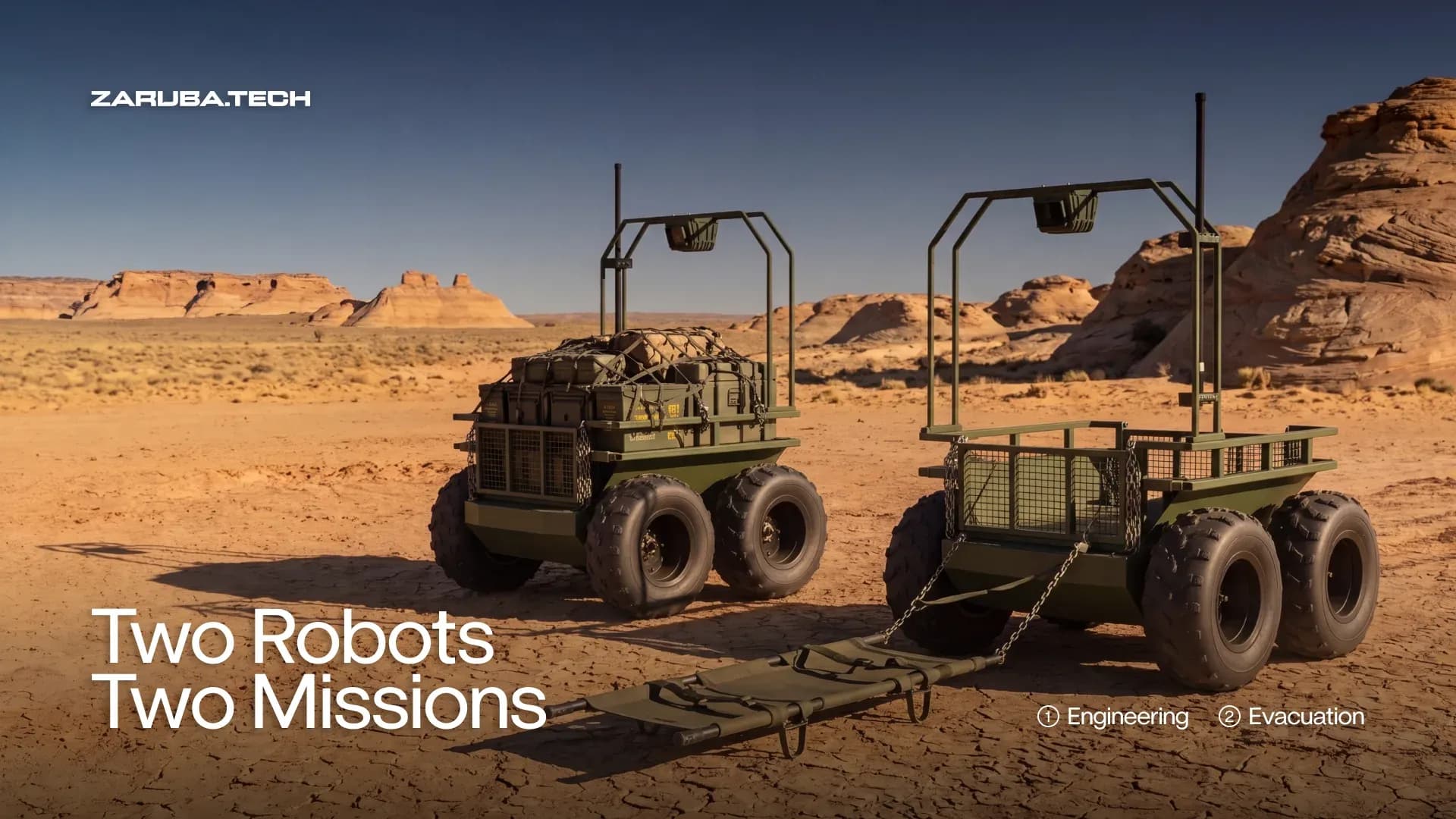
An evacuation UGV is a ground robotic platform designed to transport wounded personnel or assist medical evacuation teams in hazardous environments. Its primary objective is simple: to remove injured soldiers from dangerous areas while minimizing exposure for medics and evacuation personnel.
Instead of sending multiple soldiers into direct fire, an unmanned evacuation platform can reach the casualty, transport them to a safer location, and reduce the number of personnel exposed during the rescue process.
Missions Performed by an Evacuation UGV
Evacuation UGVs support several critical battlefield tasks, including:
- Transporting wounded soldiers from frontline positions
- Delivering medical equipment and emergency supplies
- Assisting casualty evacuation teams in high-risk areas
- Reducing exposure of combat medics to enemy fire
- Supporting military units operating in difficult terrain
These platforms are often required to travel across mud, debris, trenches, loose soil, and damaged infrastructure while carrying the weight of an injured soldier and medical equipment. Stability, smooth movement, and reliable remote control are essential, as sudden impacts or instability can worsen a casualty's condition.
What Is an Engineering UGV?
An engineering UGV is a robotic ground platform designed to support military engineering operations in hazardous environments. Rather than transporting personnel, it carries specialized equipment, engineering payloads, or mission-specific tools that enable engineering units to perform their tasks without exposing operators to unnecessary danger.
Engineering UGVs are used wherever technical work must be completed in areas that may be under enemy observation, exposed to indirect fire, or otherwise unsafe for continuous human presence.
Typical engineering missions include:
- Transporting engineering equipment
- Carrying heavy mission-specific payloads
- Supporting field engineering operations
- Delivering tools and supplies to forward positions
- Performing engineering support without placing personnel directly in hazardous areas
Because engineering tasks vary significantly, these UGVs often emphasize payload flexibility, modular equipment integration, and the ability to operate while carrying heavier loads.
The Main Difference Between Evacuation and Engineering UGVs
Although both platforms reduce risk for military personnel, they are designed around fundamentally different operational priorities.
An evacuation UGV is engineered to protect human life and safely transport casualties. Every aspect of its design supports stable movement, reliable casualty transport, and dependable operation during medical evacuation missions.
An engineering UGV, by contrast, is optimized to complete technical or engineering tasks in hazardous environments. Its primary objective is moving equipment, supporting engineering operations, and carrying specialized payloads rather than transporting people.
Differences in Payload
Payload requirements differ considerably between the two systems.
An evacuation UGV is designed to transport wounded personnel safely and typically carries 150–400 kg (330–880 lbs), enough for a casualty on a stretcher plus essential medical equipment.
An engineering UGV is built to transport heavy equipment and mission-specific payloads, with a typical capacity of 500–1,000 kg (1,100–2,200 lbs) or more, depending on the platform and operational requirements.
Differences in Mobility and Control Requirements
Both systems require excellent off-road mobility, but they prioritize different operational characteristics.
Evacuation UGVs focus on:
- Smooth movement over rough terrain
- Stable transport of casualties
- Precise remote control
- Reliable operation under battlefield conditions
Engineering UGVs prioritize:
- Carrying heavier loads
- Operating while towing or transporting equipment
- Maintaining traction under increased weight
- Supporting a wide variety of engineering missions
Their suspension, chassis configuration, and weight distribution may therefore differ based on expected operational demands.
How Both Types of UGVs Reduce Risk for Military Personnel
Despite their different missions, both systems serve the same strategic objective: reducing human exposure to danger.
Evacuation UGVs protect:
- Wounded soldiers
- Combat medics
- Casualty evacuation teams
Engineering UGVs protect:
- Combat engineers
- Technical specialists
- Support personnel working in hazardous areas
By replacing direct human involvement during high-risk operations, both platforms improve operational safety while allowing units to complete essential missions under combat conditions. Similar principles apply to other unmanned systems used to reduce personnel exposure, including security patrol drones, which can perform monitoring tasks without requiring personnel to remain continuously in potentially dangerous areas.
What Should Commanders and Procurement Teams Evaluate Before Choosing a UGV?
Selecting the right unmanned ground vehicle requires more than comparing specifications. Procurement decisions should begin with a clear understanding of the unit's operational mission.
Key evaluation criteria include:
Mission Requirements
The intended mission determines whether an evacuation or an engineering platform is the better choice. A system optimized for casualty transport will not necessarily perform engineering tasks efficiently, and vice versa.
Payload Capacity
The platform must safely carry the expected load without compromising mobility or stability.
Operational Range and Endurance
Battery life or fuel capacity should support planned missions without frequent interruptions for recharging or refueling.
Mobility and Terrain Performance
Military UGVs should maintain reliable operation across mud, sand, slopes, rubble, vegetation, and damaged infrastructure.
Communication Reliability
Stable remote control and resilient communications are essential, particularly in contested environments where electronic interference may be present.
Maintainability
Platforms that allow rapid field repairs help minimize downtime and keep systems operational during extended deployments.
Modularity
A modular design allows units to adapt the same platform for evolving operational requirements by integrating different mission equipment.
Operator Training
The effectiveness of any UGV depends on properly trained personnel. Intuitive controls, manageable training requirements, and operational simplicity contribute to faster deployment and better mission performance.
Total Cost of Ownership
Procurement decisions should account not only for acquisition costs but also for maintenance, spare parts, training, and long-term operational expenses.
Compatibility with Unit Missions
The best UGV is the one that directly supports the specific tasks the unit performs rather than attempting to serve every possible role.
Choosing the Right UGV for Your Mission
Evacuation and engineering UGVs are not interchangeable systems. Although they may share a common robotic platform, they are designed for different missions, built around different operational requirements, and evaluated using different performance criteria.
An evacuation UGV prioritizes the safe transport of wounded personnel and the protection of medical teams, while an engineering UGV focuses on supporting technical operations and transporting specialized equipment in hazardous environments. Selecting the appropriate platform ensures that military units receive a system optimized for their mission, improving operational effectiveness while reducing personnel risks.
For organizations evaluating different unmanned platforms for military and security applications, Zaruba also provides a full product range of robotic and unmanned systems.