
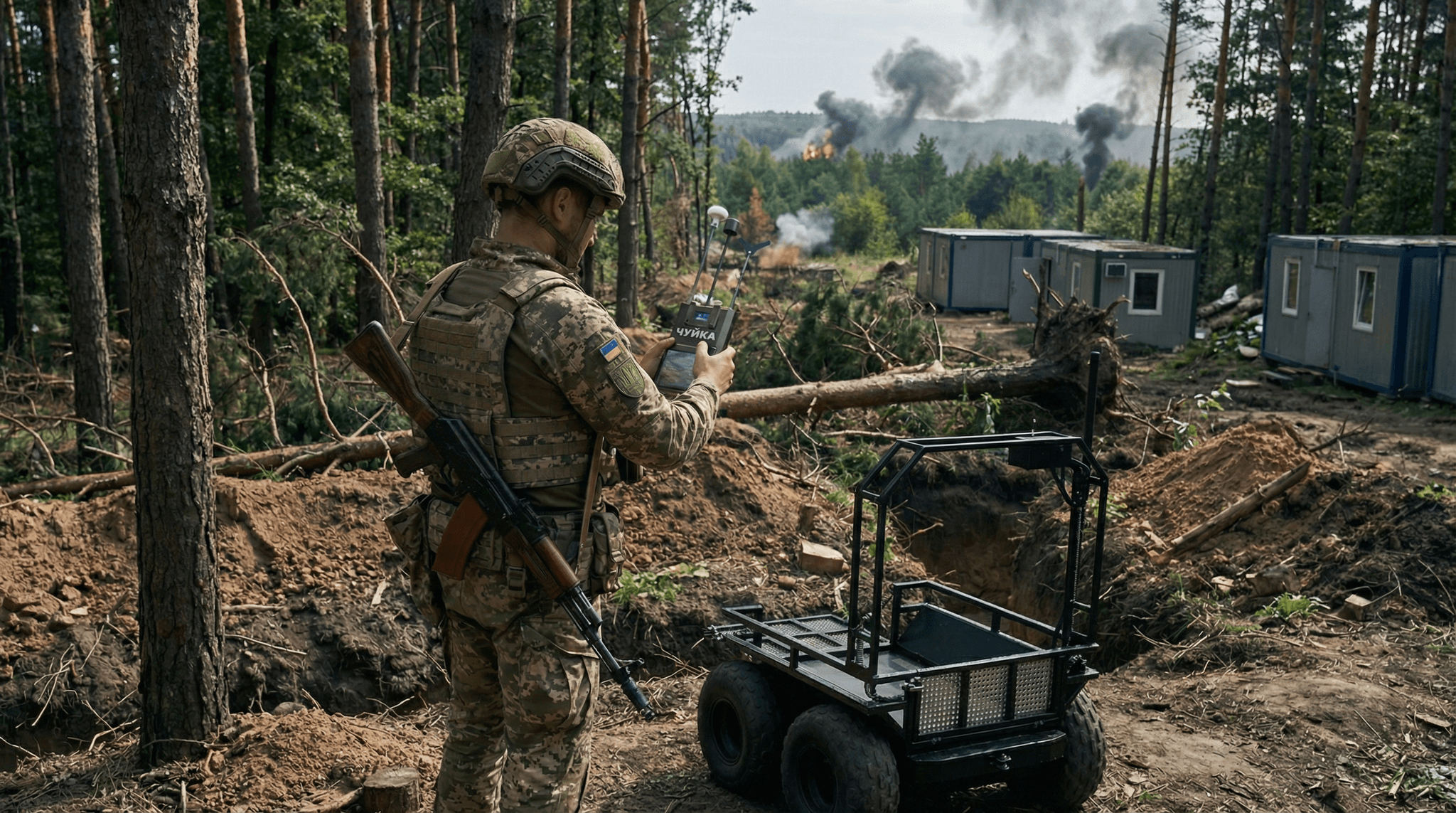
Technological transformation of warfare in the 21st century
Armed conflicts are rapidly transforming under the influence of technology, and for the United States, this is a matter not only of innovation but also of long-term strategic advantage. In these new conditions, dominance is determined not by the size of forces or the volume of equipment, but by the ability to process data quickly, integrate systems, and operate under constant uncertainty.
Drones, artificial intelligence, and autonomous platforms are shaping a new model of combat, where speed of decision-making, precision, and the ability to scale effects play a key role.
The role of unmanned systems, AI, and networked operations
Unmanned systems provide continuous surveillance, reconnaissance, targeting, and precision strikes without directly endangering personnel. The constant presence of drones in the air, at sea, and on land creates a continuous information environment where any activity can be rapidly detected and analyzed. The widespread use of such systems shifts the balance of power: relatively low-cost solutions can overwhelm an opponent’s defenses and create an asymmetric advantage.
A key factor in this transformation is artificial intelligence, which significantly enhances the effectiveness of military systems. It enables the processing of large volumes of data, automatic target detection, and the prediction of situational developments. For U.S. forces, this translates into a substantial reduction in the time between detection and action, providing an advantage in fast-paced operations. Looking ahead, AI is becoming the foundation of autonomous systems capable of performing tasks with minimal human intervention, expanding opportunities for scalability and adaptability.
The modern battlefield is increasingly network-centric, where data from drones, satellites, and sensors are integrated into a single digital ecosystem. This provides a shared operational picture, synchronized actions, and rapid decision-making across multiple domains. At the same time, a broader technological ecosystem is developing, including autonomous platforms, electronic warfare, cyber tools, and satellite solutions. The integration of these technologies enables simultaneous operations on land, in the air, at sea, in space, and in cyberspace, ensuring both efficiency and resilience to changes and threats.
Changing nature of combat operations and emerging challenges
Technologies are transforming the very nature of combat operations: instead of large concentrations of forces, distributed, mobile, and high-precision operations are increasingly used. The role of small units is growing, which can operate autonomously while remaining integrated into a single network. It allows rapid response to threats and real-time exploitation of opportunities. For the United States, this is critical, as the global scope of its presence demands flexible, scalable, and technologically integrated solutions.
At the same time, the development of these technologies is accompanied by new challenges — from cyber threats and vulnerabilities in digital systems to increasing international competition in AI and autonomous platforms. This marks a new stage in the technological race, where the speed of innovation and its practical implementation play a key role.
Technological advantage as the key to future conflicts
21st-century armed conflicts are increasingly shifting into the technological domain, where the key factor is not resources but the ability to rapidly integrate data, algorithms, and autonomous systems into a single effective network. Drones, artificial intelligence, and digital ecosystems are already shaping a new model of combat, in which advantage is achieved through speed, precision, and adaptability.
For the United States, this means the need for continuous technological advancement and the maintenance of innovative leadership amid growing global competition. The ability to scale solutions, respond rapidly to changes, and balance efficiency with control will determine success in next-generation conflicts.