The technological rivalry between China and the Western world has escalated into what many analysts describe as a new Cold War. Unlike the ideological standoff of the 20th century, this competition centers on semiconductors, artificial intelligence, quantum computing, and the infrastructure of the digital age.
The Semiconductor Battleground
At the heart of the tech war lies the semiconductor industry. Advanced chips power everything from smartphones to military systems, and control over their production has become a matter of national security.
Semiconductors are the new oil. Whoever controls the supply chain controls the future of technology.
The United States has implemented sweeping export controls designed to deny China access to advanced chip manufacturing equipment. These restrictions target not just American companies but also allies in Japan, the Netherlands, and South Korea whose equipment is essential for producing cutting-edge processors.
China's Response Strategy
Beijing has responded with massive investments in domestic semiconductor production. The strategy operates on multiple fronts:
State Funding — Hundreds of billions of dollars committed to chip industry development
Talent Acquisition — Aggressive recruitment of engineers from Taiwan, South Korea, and the US
Alternative Architectures — Investment in RISC-V and other open-source chip designs
Mature Node Focus — Dominating production of older but still essential chip technologies
Vertical Integration — Building entire supply chains within Chinese borders
The AI Arms Race
Artificial intelligence represents perhaps the most consequential arena of competition. Both sides recognize that leadership in AI will translate to advantages across military, economic, and social domains.
Chinese AI development has achieved remarkable progress despite restrictions. Companies like Baidu, Alibaba, and Tencent continue advancing large language models and computer vision systems. The country's vast data resources and willingness to deploy AI at scale provide advantages that pure computing power cannot replicate.
Defense Technology Implications
The tech competition has direct implications for military capabilities:
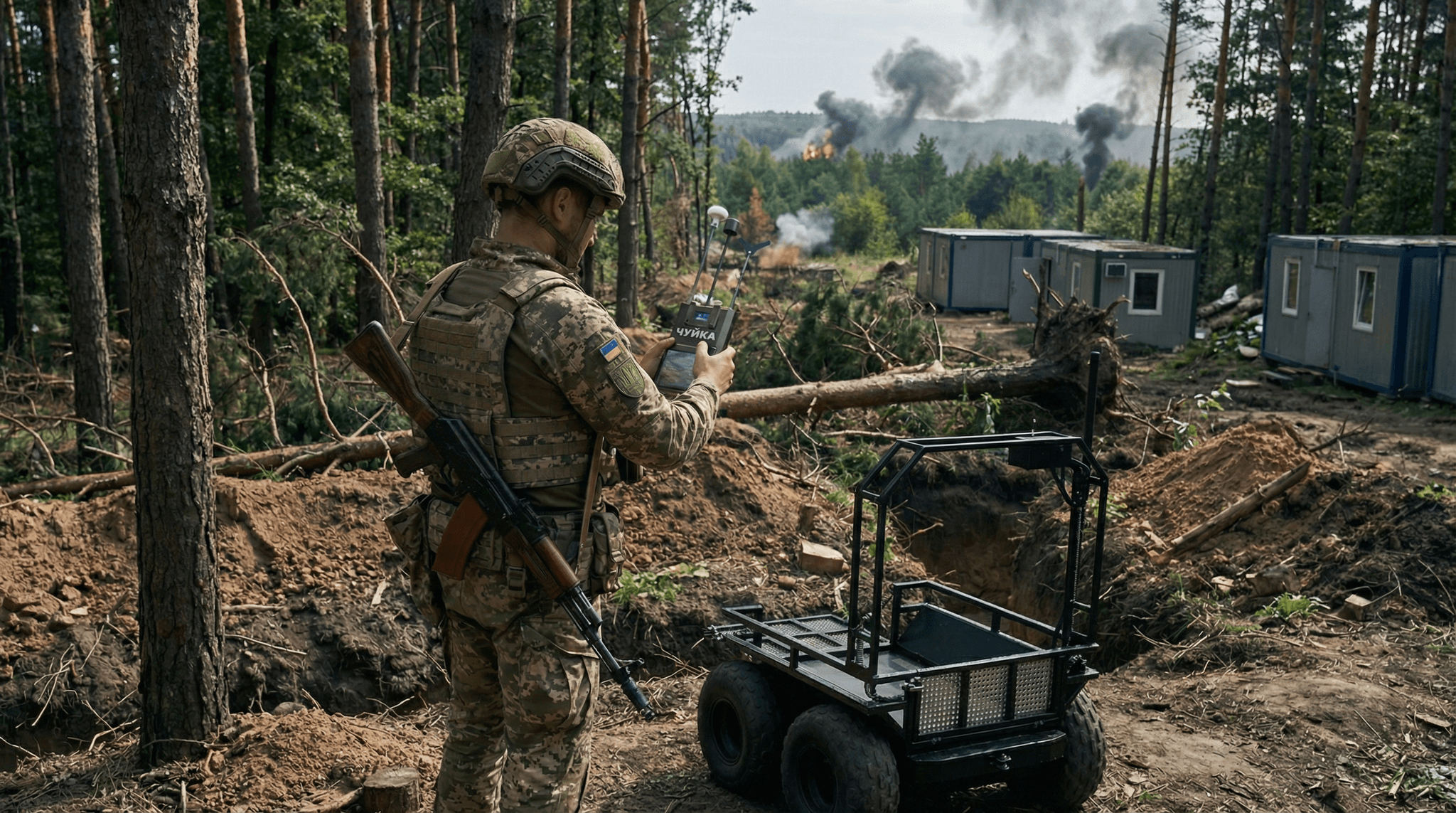
Autonomous weapons systems require advanced AI and processors
Electronic warfare depends on software-defined radio and signal processing
Cyber operations demand cutting-edge computing resources
Intelligence gathering relies on machine learning and data analytics
Command systems need secure, high-performance communications
Western defense industries face the challenge of maintaining technological superiority while supply chains become increasingly fragmented along geopolitical lines.
Strategic Implications
The tech cold war will define international relations for decades. Success requires sustained investment in research and development, close coordination with allies, and recognition that technological leadership is inseparable from national security.
For those in the defense technology sector, understanding this landscape is not optional—it is essential for developing products and strategies that will remain viable as the competition continues to evolve.